Home

Sök


Header (Main)
Bransch
Rörlighet Rörlighet
Fordonsindustrin
Driving The Future Of SDV

Vi banar väg för SDV:s framtid

Explore
Flyg- och rymdindustrin
AI-Enabled Aircraft Health Monitoring for Predictive Maintenance

AI-baserad övervakning av flygplanets skick för förebyggande underhåll

Explore
Järnväg
Engineering Next-Gen Rail Mobility

Utveckling av nästa generations järnvägstransporter

Explore
Närings- och fritidsfordon
Reinventing the Recreational Vehicle

Att förnya fritidsfordonet

Explore
Terrängfordon
Off-highway Vehicles and Machines

Terrängfordon och terrängmaskiner

Explore
AI in Mobility

Artificiell intelligens inom mobilitet

Explore
Hållbarhet Hållbarhet
Diskret tillverkning och industriprodukter
Byggteknik och smart infrastruktur
Elförsörjning och styrsystem
Industrimaskiner
LTTSGridEyeTM

LTTSGridEye™

Explore
Processindustri
Olja och gas
Kemikalier
FMCG
ISG: Oil & Gas Industry Services and Solutions – AI and Cloud – Americas

Marknadsledare enligt ISG Provider Lens™: Olje- och gasindustrin – AI och molntjänster – Nordamerika

Explore
L&T Technology Services, Siemens Partner for AI-led Transformation in Process Engineering & Smart Manufacturing

LTTS och Siemens ingår partnerskap för AI-driven omställning inom processteknik och smart tillverkning

Explore
Teknik Teknik
Datacenter
LTTS Data Center Services - From the Chip to the Grid!

LTTS datacentertjänster – Från chip till elnät!

Explore
HiTech
Konsumentelektronik
Media och underhållning
NexGen Comms
Halvledare
Automated Ad Integration and Delivery Validation

Automatiserad annonsintegration och validering av leverans

Explore
MedTech
L&T Technology Services Transforms Respiratory Diagnostics with NVIDIA AI-Powered Digital Twin Technology

LTTS revolutionerar diagnostiken inom andningsvägarna med NVIDIA:s AI-drivna digitala tvillingteknik

Explore
Offentlig infrastruktur och smarta städer
Integrated Smart Surveillance Project

Integrated Smart Surveillance Project

Explore
Programvara och plattformar
LTTS & SymphonyAI to provide AI-based transformation

LTTS och SymphonyAI ska genomföra en AI-baserad omställning

Explore
Unlocking PLxAI with Alind Saxena

En djupdykning i PlxAI tillsammans med Alind Saxena

Explore
Upptäck våra lösningar Upptäck våra lösningar
Tjänster
Digital teknik och rådgivning Digital teknik och rådgivning
Artificiell intelligens
Cybersäker
Säkerhetsövervakning
Säkerhetsoperationscentralen
Säkerhetstjänster
Säkerhetslösningar
Fängslande upplevelser
Industri 4.0
Private Equity
Produktrådgivning
Hållbarhetsteknik
En hållbar och smart värld
5G
Pragmatic by Design: Engineering AI for the Real World

Pragmatisk design: Utveckling av AI för den verkliga världen

Explore
Produktutveckling Produktutveckling
Programvaruutveckling
Molnteknik
DevOps
Teknisk analys
Fängslande upplevelser
Föda och underhåll
Användarupplevelse
Röstinnovationer
Inbyggd teknik
Inbyggda system
Näring
VLSI
Teknik för bärbara enheter
Mekanisk konstruktion
CAE och CFD
CAx-automatisering
Testning och validering
Integrerad konstruktion, validering och testning
Lab som tjänst
Testning
ISG: Automotive and Mobility Services and Solutions – Automotive Engineering and Manufacturing Services – North America

Marknadsledare enligt ISG Provider Lens™: Tjänster och lösningar inom fordons- och mobilitetsbranschen – Nordamerika

Explore
Tillverkningsteknik Tillverkningsteknik
Smart tillverkning
Anläggningskonstruktion och teknik
Digital fabrik och simuleringar
Effektiverade verksamheter
Logistikteknik
Inköp och upphandling
Tillverkning och planering
Effektiverade verksamheter
Digital fabrik och simuleringar
Linjeutbyggnad och överföring
Automatisering inom tillverkningsindustrin
Utveckling av nya produkter
Anläggningskonstruktion och teknik
PLM i molnet
Produktionsstyrning
Agile leveranskedja
Innehållsutveckling
Material- och komponenthantering
Inköp och upphandling
L&T Technology Services Transforms Respiratory Diagnostics with NVIDIA AI-Powered Digital Twin Technology

LTTS revolutionerar diagnostiken inom andningsvägarna med NVIDIA:s AI-drivna digitala tvillingteknik

Explore
Anläggningsteknik Anläggningsteknik
CAPEX-projekt – E/EPCM-tjänster
Operativ excellens
Växtvård och skötsel
Material- och komponenthantering
Teknik för efterlevnad av regelverk
ISG: Oil & Gas Industry Services and Solutions – AI and Cloud – Americas

Marknadsledare enligt ISG Provider Lens™: Olje- och gasindustrin – AI och molntjänster – Nordamerika

Explore
Upptäck våra lösningar Upptäck våra lösningar
Lösningar
AiCE
AiKno®
AnnotAI
ARC
Ramverk för tillgångars skick
CHEST-rAi™
Uppkopplad säkerhet
EDGYneer
ESM
EvQUAL
FlyBoard®
Fusion
i-BEMS
Nliten
nBOn
PSM
SafeX
IP för halvledare
Lösning för sensorer och gateways
UBIQWeise 2.0
Insikter
Analytikerrapporter
Bloggar
Broschyrer
Fallstudier
E-böcker
Evenemang
Podcasts
Perspektiv
Videor
Webbseminarier
Vitböcker
Karriär
Om oss
Utmärkelser
Allianser
Analytiker
Styrelsen
CSR
Engineer At Heart
Att driva Engineering the change
Innovationer
Investerare
Nearshore-centra
Nyheter och media
Kvalitetsledning
Hållbarhet inom företaget
Kundutlåtanden
Kontakt
Header (Secondary)
Sök
E-post
  • English
  • Deutsch
  • 日本語
  • Svenska
Kontakt

Breadcrumb

  1. Blogs
  2. Industry
  3. Beyond Efficiency: Smart Factories As Aerospace’s Next Competitive Advantage

Beyond Efficiency: Smart Factories As Aerospace’s Next Competitive Advantage

Suresh MR
Suresh MR

Delivery Head- Aerospace

Aerospace

Published on 04 Jun 2026

min read

133

Views

LTTS

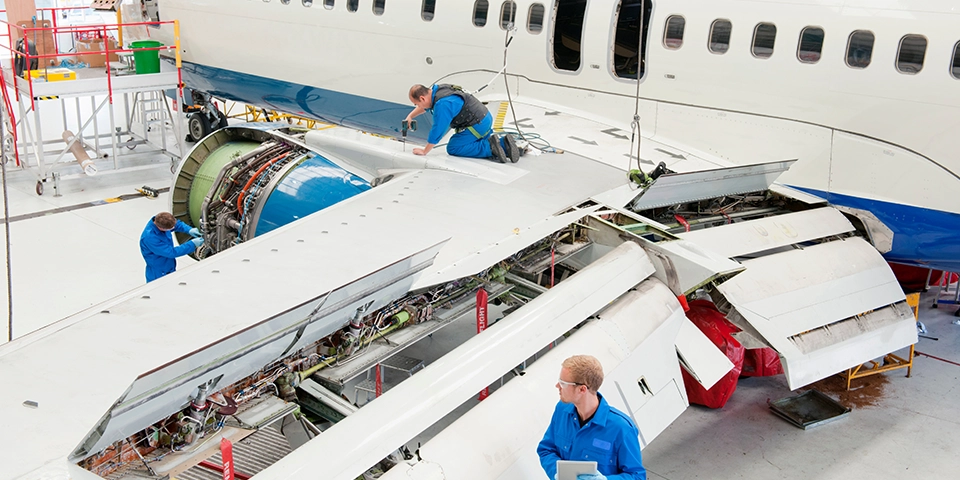
In aerospace manufacturing, there is very little margin for error. A delayed component, an undetected defect, or an unexpected equipment failure can trigger cascading consequences across production schedules, regulatory compliance, customer commitments, and operating costs.

For decades, the industry managed this complexity through precision engineering, tightly controlled production environments, and highly standardized manufacturing processes. Stability mattered more than flexibility. Predictability was the operating model.

That model is now under pressure.

Aircraft demand is rising again as fleets are being modernized and the demand for electrification, advanced materials, connected systems, and software-defined architectures increase product complexity across the landscape. At the same time, aerospace manufacturers are dealing with supply chain volatility, workforce shortages, inflationary pressure, and growing sustainability expectations.

The challenge is no longer simply building better aircraft, but scaling production while simultaneously improving quality, accelerating delivery timelines, managing costs, ensuring compliance, and building resilience into operations. This is where the idea of the smart factory is becoming strategically important, especially as the foundation for a more intelligent manufacturing model.

Why Traditional Manufacturing Models Are Reaching Their Limits

Historically, aerospace manufacturing systems were designed for longer production cycles and relatively stable operating conditions. Processes were optimized around repeatability and control.

Modern aircraft programs, however, involve increasingly interconnected systems spanning electronics, embedded software, advanced composites, connectivity platforms, and digital controls. Engineering and manufacturing can no longer operate in silos, with a change in one part of the system creating downstream impacts across production, suppliers, certification, and maintenance operations.

At the same time, the aerospace supply chain has become far more fragmented. Many Tier 2 and Tier 3 suppliers are still early in their digital transformation journeys, creating visibility gaps and operational inconsistencies across the ecosystem.

The result – a manufacturing environment that is significantly more dynamic and harder to manage with conventional operating models.

The Real Shift is from Reactive Manufacturing to Intelligent Manufacturing

Traditional manufacturing environments are largely reactive, where problems are identified after they occur. Equipment is repaired after failures happen and Bottlenecks become visible only once schedules begin slipping.

A smart factory changes that equation. By connecting engineering, manufacturing, operational, and supply chain data in real time, manufacturers gain the ability to anticipate disruptions before they escalate. Production systems become more adaptive, maintenance is predictive, and quality issues can be identified earlier in the process rather than downstream after costly rework. In effect, manufacturing paradigms starts evolving from a production function into an intelligence layer.

That distinction matters because aerospace competitiveness is increasingly being shaped not only by engineering excellence, but by the ability to make faster, more informed operational decisions at scale.

The Business Value Extends Far Beyond Efficiency

Productivity gains and cost reduction are often the most visible benefits associated with smart factories. Those outcomes matter, particularly in an industry under constant pressure to improve margins and delivery performance.
But the long-term value is much broader.

Smart factories improve production visibility, strengthen traceability across the product lifecycle, and create greater responsiveness to regulatory requirements and customer demand fluctuations. They also help manufacturers ramp production more confidently in periods of market expansion.

Perhaps more importantly, they create continuity between manufacturing and downstream lifecycle operations. As aerospace companies place greater emphasis on lifecycle value creation, manufacturing data itself becomes a strategic asset. Insights generated during production can support maintenance, repair, and overhaul (MRO) operations long after an aircraft leaves the factory floor.

This is one of the most important shifts underway in the industry, where the factory is no longer just a place where products are built, but rather, is a continuous source of operational intelligence across the lifecycle of the asset.

The Industry is Moving Toward Connected, Adaptive Production

Several trends are accelerating this transition. Digital twins are enabling aerospace manufacturers to simulate production environments and validate engineering changes before physical implementation. AI is increasingly being used to support predictive maintenance, anomaly detection, quality inspection, and supply chain analysis.

Sustainability is also becoming deeply connected to manufacturing strategy. Energy optimization, waste reduction, and more efficient resource utilization are now operational priorities as much as environmental ones.
At the same time, recurring global supply chain disruptions have reinforced the importance of visibility across supplier networks and production ecosystems.

Taken together, these trends are pushing aerospace manufacturing toward a model that is more connected, adaptive, and intelligence-driven than traditional factories were ever designed to support.

Execution at Scale Remains the Hardest Part

Most aerospace companies already recognize the strategic importance of intelligent manufacturing. The real challenge is execution.
Scaling transformation across large manufacturing environments is difficult, particularly in organizations operating with legacy infrastructure, fragmented data systems, and deeply established operational processes. Cybersecurity concerns, workforce readiness, integration complexity, and uncertainty around ROI often slow adoption further.

Yet despite these challenges, the flight path is increasingly clear. The aerospace smart factory is evolving into the operational control center of the modern aerospace enterprise, capable of improving resilience, traceability, flexibility, and decision-making across increasingly complex manufacturing ecosystems. The larger question for aerospace leaders therefore is whether organizations can adapt quickly enough to the opportunities that await.

 

Relevant Blogs

Scaling AI Adoption in Aerospace Engineering
Beyond Automation: How AI is Transforming Test Engineering for Aerospace into Engineering Intelligence
When Vehicles Start Thinking: The Rise of AI-Native Mobility
Explore All

Håll kontakten med oss

Prenumerera på vår blogg

Suresh MR
Suresh MR

Delivery Head- Aerospace

Suresh MR is a seasoned aerospace and defense leader with over 28 years of experience, currently serving as Delivery Head for Aerostructures, Manufacturing Engineering, and Aftermarket domains. He brings deep technical expertise across the end-to-end aerospace lifecycle, including aerostructure design and analysis, manufacturing process optimization, and MRO/aftermarket services. His experience spans leading large-scale engineering programs, driving digital and process transformation, and delivering high-quality, compliant solutions aligned with global aerospace standards. With a strong blend of domain knowledge and leadership acumen, he has consistently enabled innovation, operational excellence, and value delivery for OEMs and Tier 1 partners.

Footer Navigation
  • Bransch
    • Rörlighet
      • Flyg- och rymdindustrin
      • Fordonsindustrin
      • Järnväg
      • Lastbilar och terrängfordon
    • Hållbarhet
      • Diskret tillverkning och industriprodukter
      • Processindustri
    • Teknik
      • Datacenter
      • Konsumentelektronik
      • MedTech
      • Media och underhållning
      • NexGen Comms
      • Halvledare
      • Programvara och plattformar
      • Offentlig infrastruktur och smarta städer
  • Tjänster
    • Digital teknik
      • Artificiell intelligens
      • Cybersäker
      • Säkerhetsövervakning
      • Säkerhetslösningar
      • Säkerhetstjänster
      • Fängslande upplevelser
      • Industri 4.0
      • Private Equity
      • Produktrådgivning
      • Hållbarhetsteknik
      • En hållbar och smart värld
      • 5G
    • Produktutveckling
      • CAE och CFD
      • CAx-automatisering
      • Programvaruutveckling
      • Molnteknik
      • DevOps
      • Inbyggda system
      • Teknisk analys
      • Integrerad konstruktion, validering och testning
      • Lab som tjänst
      • Näring
      • Testning
      • Testning och validering
      • Användarupplevelse
      • VLSI
      • Röstinnovationer
      • Teknik för bärbara enheter
    • Tillverkningsteknik
      • Effektiverade verksamheter
      • Agile leveranskedja
      • Innehållsutveckling
      • Digital fabrik och simuleringar
      • Linjeutbyggnad och överföring
      • Automatisering inom tillverkningsindustrin
      • Utveckling av nya produkter
      • PLM i molnet
      • Anläggningskonstruktion och teknik
      • Inköp och upphandling
    • Anläggningsteknik
      • CAPEX-projekt – E/EPCM-tjänster
      • Material- och komponenthantering
      • Operativ excellens
      • Växtvård och skötsel
      • Inköp och upphandling
      • Teknik för efterlevnad av regelverk
  • Att driva Engineering the change
  • Karriär
  • Engineer At Heart
  • Resurser
  • Lösningar
    • AiCE
    • AiKno®
    • AnnotAI
    • ARC
    • Ramverk för tillgångars skick
    • CHEST-rAi™
    • Uppkopplad säkerhet
    • EDGYneer
    • ESM
    • EvQUAL
    • FlyBoard®
    • Fusion
    • i-BEMS
    • LTTSiDriVe™
    • Nliten
    • nBOn
    • PLxAI
    • PSM
    • SafeX
    • IP för halvledare
    • Lösning för sensorer och gateways
    • UBIQWeise 2.0
    • TrackEi™
  • Om oss
    • Utmärkelser
    • Allianser
    • Bloggar
    • Styrelsen
    • CSR
    • Evenemang och webbseminarier
    • Innovationer
    • Investerare
    • Mediepaket
    • Nearshore-centra
    • Nyheter och media
    • Kvalitetsledning
    • Hållbarhet inom företaget
    • Kundutlåtanden
LTTS
  •  Twitter
  •  LinkedIn
  •  YouTube
  •  Facebook
  •  Instagram
  • Upphovsrätt och villkor
  • Sekretess
  • Sitemap
  • info@ltts.com

© 2026 L&T Technology Services Limited. All Rights Reserved.