


Medizinische Geräte und Biowissenschaften
LTTS arbeitet mit weltweit führenden Medizintechnik-OEMs zusammen, um eine unübertroffene betriebliche Effizienz zu erzielen, die tiefgreifende F&E-Durchbrüche und inkrementelle digitale Exzellenz für eine bezahlbare und sichere Patientenversorgung ermöglicht. Wir konzentrieren uns auf die Beschleunigung der Markteinführung und die Optimierung der Betriebskosten in den Bereichen digitale Gesundheit, Geräte- und Wartungstechnik, QARA (Quality Assurance and Regulatory Affairs), digitale Fertigung und KI in der Medizintechnik.
Unser Portfolio mit über 200 mitverfassten Patenten spiegelt unser großes Engagement für medizintechnische Innovationen wider.
Von der Entwicklung von Patientenfernüberwachungssystemen und Präzisionsdiagnostik bis hin zur Implementierung intelligenter Automatisierung in der Fertigung - die Ingenieure von LTTS helfen Ihnen dabei, die Art und Weise, wie Gesundheitsversorgung bereitgestellt und erlebt wird, neu zu definieren. Wir nutzen die Fortschritte in den Bereichen vernetzte Medizin, Wearables, KI und digitale Fertigung, um die Patientenversorgung und das Wohlbefinden zu revolutionieren.
Lassen Sie uns zusammenarbeiten, um Ihre Systeme zu optimieren und den Weg für eine bessere Zukunft zu ebnen.
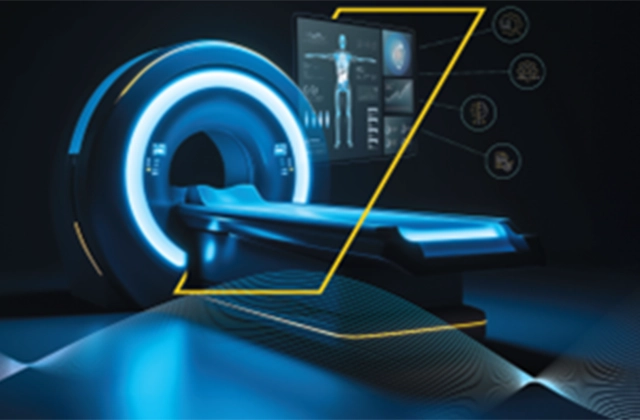
Was wir anbieten
Wir arbeiten mit führenden Gesundheitsunternehmen zusammen, um innovative medizinische Geräte, vernetzte Gesundheitssysteme und digitale Plattformen zu entwickeln, die die Patientenversorgung neu definieren und die Markteinführung beschleunigen.

Digitale Gesundheit
Neudefinition der Patientenversorgung mit KI-gesteuerten Apps, Plattform-Engineering und fortschrittlicher Analytik.

Geräte- und Unterhaltstechnik
Beschleunigen Sie Innovation und Unterhaltsparadigmen mit KI-gestütztem Design, Testen und Support für Hochleistungsgeräte.

Qualität und regulatorische Sicherung (QARA)
Vereinfachen Sie die globale Compliance mit KI-Einsichten für regulatorische und qualitative Herausforderungen in der Medizintechnik.

Digitale Fertigung
Revolutionieren Sie die Fertigung mit KI-gestützter Automatisierung, Anlagenübertragung und Lieferkettenlösungen.

Künstliche Intelligenz (KI)
Verändern Sie das Gesundheitswesen mit KI-gesteuerten Diagnosen, prädiktiven Analysen und personalisierten Behandlungspfaden.
Unsere Lösungen

AiCE
Die Lösung optimiert den Prozess des Clinical Evaluation Report (CER) durch Automatisierung der Literaturberichterstattung und steigert die Effizienz.

Brustkorb-rAiᵀᴹ
KI-gestütztes Radiologie-Tool zur Erkennung und Meldung von Lungenanomalien auf Röntgenbildern, das die diagnostische Genauigkeit und Effizienz erhöht.

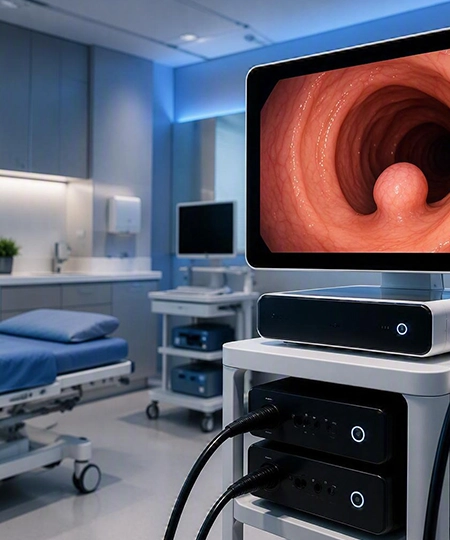
Softwaredefinierte Endoskopie
Eine KI-gestützte Plattform, die endoskopische Verfahren durch fortschrittliche Bildvisualisierung in Echtzeit und Entscheidungshilfen verbessert und die Patientenergebnisse steigert.

AiKnoᵀᴹ
KI-gesteuerte Plattform, die industrielle Abläufe durch die Vernetzung von Anlagen, die Analyse von Daten und die Vorhersage des Anlagenzustands für eine proaktive Wartung verbessert.

EDGYneer
Gerätemanagementlösung, die die Verbindung, Überwachung und Wartung dezentraler Anlagen vereinfacht und so die betriebliche Effizienz und Betriebszeit der Anlagen erhöht.
MDaaS
Eine Plattform, die verschiedene Informationssysteme des Gesundheitswesens integriert, die Datenerfassung standardisiert und einen sicheren Zugang zu realen Daten gewährleistet.

Supplier Quality Engineering Rahmen
Vereinfachen Sie die Einhaltung von Vorschriften durch Lieferanten für Hersteller von Medizinprodukten. Wir rationalisieren das Qualitätsmanagement, senken die Kosten und verbessern die Effizienz, damit Sie sich auf Innovationen konzentrieren können.

QAssure.ai
AI-powered QARA suite simplifying documentation, delivering insights, improving post-market monitoring, and accelerating regulatory compliance.
LTTS-Kante

Fachwissen
Medizintechnik und -geräte, Patiententherapiegeräte, vernetzte Gesundheitssysteme, digitale Gesundheitsplattformen

Solide Partnerschaften
Führende Industriekooperationen, verkürzte Markteinführungszeiten

Ökosystem
Enthüllung einer hochmodernen KI-Erlebniszone auf Basis von NVIDIA AI
Erbe
Erfahrung als OEM QMS für PDLC FDA- und CE-zugelassene Produkte Inter Qualitätssystem - ISO 13485, IEC 60601
Erfolgsgeschichten
Integrierte Lösung für den modernen chirurgischen Workflow
Die Krankenhäuser von heute sind große, komplexe Ökosysteme, die durch zahlreiche, nicht miteinander verbundene AV- und IT-Systeme und -Prozesse miteinander verbunden sind. Diese Komplexi...
Mehr erfahren
Globale Compliance-Paradigmen für die Fernüberwachung von Patienten und klinische Prüfprodukte verän...
Bei Software als Medizinprodukt (SaMD), einer Art digitaler Gesundheitstechnologie, handelt es sich um eigenständige Software, die einem Arzt bei der Entscheidungsfindung helfen, Behandlu...
Mehr erfahren
Optimierung der Reklamationsbearbeitung durch KI
Ein effektiver Umgang mit Kundenbeschwerden ist für den anhaltenden Geschäftserfolg unerlässlich.
Mehr erfahren
Ressourcen
The Engineering Behind the Medical Devices You Trust
LTTS accelerates MedTech innovation with end-to-end engineering, connected devices, AI, compliance expertise, and intelligent manufacturing transformation.
Beyond Supplier Quotes: Redefining Cost Leadership in Pharma...
Explore how LTTS helps pharmaceutical manufacturers achieve cost leadership through supply chain intelligence, cost transparency, and procurement optimization.

Medizinische Geräte
es besteht ein Bedarf an betrieblicher Effizienz, sowohl aus der Sicht der Produktentwicklung als auch des Herstellungsprozesses.

AI-driven Smart Endoscopy
LTTS' AI-driven Smart Endoscopy delivers real-time clinical intelligence via a software-defined, reconfigurable platform—enabling >90% detection accuracy and sub-15ms latency.
QAssure.Ai: LTTS’ AI-Powered QARA
QAssure.Ai by LTTS is an AI-powered QARA suite enabling predictive compliance, automated documentation, and audit readiness for MedTech leaders.

ISG MedTech 2025 - Digitale Technik und Produktentwicklung -...
LTTS wurde im ISG Provider Lens™-Bericht für 2025 als führendes Unternehmen im Bereich MedTech - Digital Engineering und Produktentwicklung ausgezeichnet.

Sustainable Supply Chains as the Next Growth Lever
Learn how Philips can turn sustainable supply chains and ESG‑aligned procurement into a powerful growth lever in the MedTech market with LTTS as an innovation partner.

Auf dem Weg zur nächsten Grenze: Die Entwicklung selbstlerne...
Selbstlernende medizinische Geräte, die durch KI, digitale Zwillinge und Edge Intelligence angetrieben werden, ermöglichen eine adaptive, personalisierte und vorausschauende Pflege und revolutionier...
ISG MedTech 2025 – Digital Engineering and Product Developme...
LTTS has been recognized as a Leader in MedTech - Digital Engineering and Product Development by the ISG Provider Lens™ report for 2025.
ISG MedTech 2025 – Regulatory Compliance, Strategy and Quali...
LTTS is proud to be recognized as a Leader in MedTech - Regulatory Compliance, Strategy, and Quality Assurance by the ISG Provider Lens® report for 2025.

Toward the Next Frontier: Engineering Self-Learning Medical ...
Self-learning medical devices, powered by AI, digital twins, and edge intelligence, enable adaptive, personalized, and anticipatory care, revolutionizing MedTech.
LTTS offers end-to-end medical device engineering across five areas: digital health, device and sustenance engineering, quality assurance and regulatory affairs (QARA), digital manufacturing, and AI in MedTech. We support OEMs from concept and design through verification, regulatory submission, manufacturing transfer and post-market. The goal is simple: faster time to market, lower operating cost and compliance built in, backed by more than 200 co-authored patents in medical technology.
Software as a Medical Device (SaMD) is software that performs a medical function, such as diagnosis or monitoring, without being part of a hardware device. It is developed under a regulated lifecycle, typically following IEC 62304, ISO 14971 for risk and IEC 62366 for usability. Validation proves the software meets its intended use. For AI-based SaMD, validation also covers data quality and model performance. LTTS brings hands-on experience from AI diagnostics such as Digital Twin, Visualization framework , Gesture control and Chest-rAi™.
LTTS helps manufacturers meet EU MDR and IVDR requirements through gap assessments, technical documentation support and EUDAMED UDI registration. For post-market surveillance, we run PMS and post-market follow-up, complaint handling, vigilance reporting, trend analysis and field actions such as recalls. The difference is closing the loop: we feed post-market data back into design, risk and quality decisions instead of treating it as a periodic reporting exercise.
Treat cybersecurity as a lifecycle discipline, not a pre-launch check. In design, that means threat modelling, security risk assessment, secure architecture and a software bill of materials (SBOM). Before release, it means security and penetration testing. After launch, it means vulnerability monitoring and timely patching. The FDA now expects this evidence in premarket submissions for cyber devices. LTTS builds these practices into your existing design control and quality processes.
LTTS supports the full device lifecycle with one engineering partner. In development, our teams cover system architecture, hardware, embedded software, mechanical design, usability, and verification and validation, with design history documentation built in from day one. In sustenance, we manage obsolescence, cost reduction, design changes and regulatory updates for products in the field. This frees internal R&D teams to focus on the next generation of products.
Start with a gap assessment. Since February 2, 2026, the FDA’s Quality Management System Regulation has incorporated ISO 13485:2016 by reference into 21 CFR Part 820. Priority areas include risk management across processes, design controls, supplier controls and inspection readiness. LTTS helps teams assess and remediate their QMS, configure eQMS workflows and strengthen CAPA, change control and audit management, so compliance becomes an everyday habit rather than a last-minute scramble.
Connected devices need testing across hardware, software, connectivity, cybersecurity and usability. Typical scope includes software V&V aligned to IEC 62304, IEC 60601 electrical safety and EMC, wireless coexistence, interoperability with apps and cloud platforms, penetration testing and human factors validation. LTTS supports test strategy, automation, protocols and reports, with full traceability to requirements and risks, so the evidence is ready for submission when you need it.
LTTS applies AI where it has a measurable impact. In diagnostics, Digital Twin, Chest-rAi™ helps radiologists separate normal from abnormal chest X-rays, and our software-defined endoscopy, built with NVIDIA, enables real-time image enhancement and polyp detection. In quality and regulatory work, QAssure.ai makes compliance more predictable. In engineering, AI speeds up design, testing and sustenance. Clinical and regulatory experts stay in control of every decision.