


Medical Devices & Life Sciences
LTTS partners with leading global medical devices OEMs to drive unmatched operational efficiencies, enabling deep R&D breakthroughs, and incremental digital excellence across affordable and secure patient care. We focus on accelerating your time-to-market and optimizing operational costs across digital health, device and sustenance Engineering, QARA (Quality Assurance and Regulatory Affairs), digital manufacturing and AI in MedTech.
Our portfolio of over 200 co-authored patents reflects a deep commitment toward medical technology innovation.
From developing remote patient monitoring systems and precision diagnostics to implementing intelligent automation on the shop floor, LTTS’ engineers help you redefine how healthcare is delivered and experienced. We continue to leverage advancements in connected healthcare, wearables, AI, and digital manufacturing toward revolutionizing the next-frontiers patient care and wellbeing.
Let us collaborate to optimize your systems and pave the way for a better tomorrow.
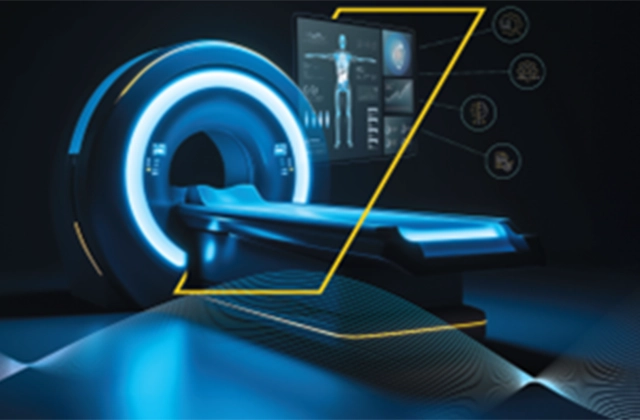
What We Offer
We partner with leading healthcare companies to develop innovative medical devices, connected health systems, and digital platforms, redefining patient care and accelerating time to market.

Digital Health
Redefining patient care with AI-driven apps, platform engineering, and advanced analytics.

Device and Sustenance Engineering
Accelerate innovation and sustenance paradigms with AI-enabled design, testing, and support for high-performance devices.

Quality & Regulatory Assurance (QARA)
Simplify global compliance with AI insights for med-tech regulatory and quality challenges.

Digital Manufacturing
Revolutionize manufacturing with AI-powered automation, plant transfer, and supply chain solutions.

Artificial Intelligence (AI)
Transform healthcare with AI-driven diagnostics, predictive analytics, and personalized care pathways.
Tell Us What You’re Looking For in MedTech
Handpicked for You
Our Solutions

AiCE
Solution optimizes the Clinical Evaluation Report (CER) process by automating literature reporting, increasing efficiency.

Chest-rAiᵀᴹ
AI-powered radiology tool designed to detect and report lung abnormalities from chest X-rays, enhancing diagnostic accuracy and efficiency.

Software Defined Endoscopy
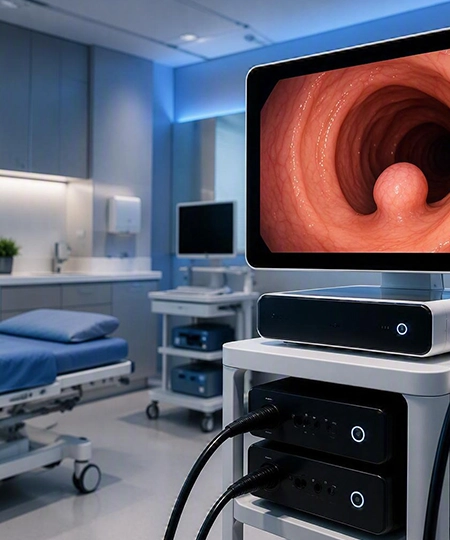
An AI-powered platform enhancing endoscopic procedures through real-time advanced image visualization, decision support, and boosting patient outcomes.

AiKnoᵀᴹ
AI-driven platform that enhances industrial operations by connecting assets, analyzing data, and predicting equipment health for proactive maintenance.

EDGYneer
Device management solution that simplifies connecting, monitoring, and maintaining remote assets, enhancing operational efficiencies and asset uptime.

MDaaS
A platform that integrates various healthcare information systems, standardizes data collection, and ensures secure access to real-world data.

Supplier Quality Engineering Framework
Simplify supplier compliance for medical device manufacturers. We streamline quality management, reduce costs, and improve efficiency—so you can focus on innovation.

QAssure.ai
AI-powered QARA suite simplifying documentation, delivering insights, improving post-market monitoring, and accelerating regulatory compliance.
Why Choose LTTS for Medical Device Engineering?

Domain Expertise
Medical technology and devices, patient therapy devices, connected health systems, digital healthcare platforms

Robust Partnerships
Leading industry collaborations, accelerated time to market

Ecosystem
Unveils cutting-edge AI experience zone built on NVIDIA AI
Legacy
Legacy as OEM QMS experience across PDLC FDA and CE approved products Inter quality system – ISO 13485, IEC 60601
Success Stories
Advancing Cardiovascular Care Through Cuffless Blood Pressure Monitoring
LTTS' AI-powered cuffless monitoring platform transforms cardiovascular care—enabling continuous, predictive, and personalized health intelligence across hospital, home, and remote environments.
Know More
Democratizing Diagnostics Through Affordable Blood Cell Analysis
LTTS engineered an affordable, clinical-grade hematology analyzer—combining microfluidics, embedded systems, and precision engineering to democratize diagnostics across emerging markets.
Know More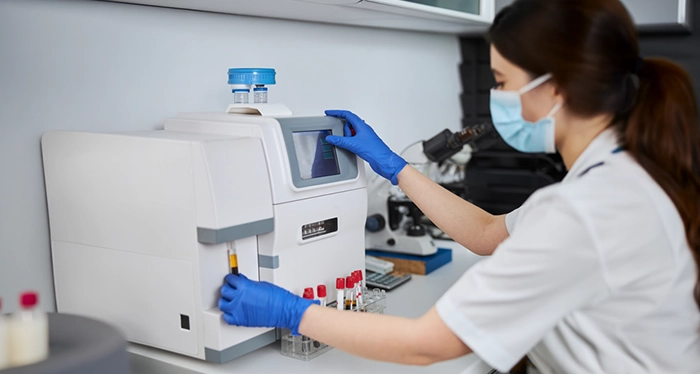
Integrated Solution for Modern Surgical Workflow
Today’s hospitals are large, complex, ecosystems linked by multiple, disconnected AV and IT systems and processes. This complexity impacts on efficiency, forcing healthcare provider and s...
Know More
Transforming Global Compliance Paradigms for Remote Patient Monitoring and Clinical Trial Products
Software as a Medical Device (SaMD), a type of digital health technology, is standalone software that can aid a clinician in making decisions, provide treatment options for a condition, o...
Know More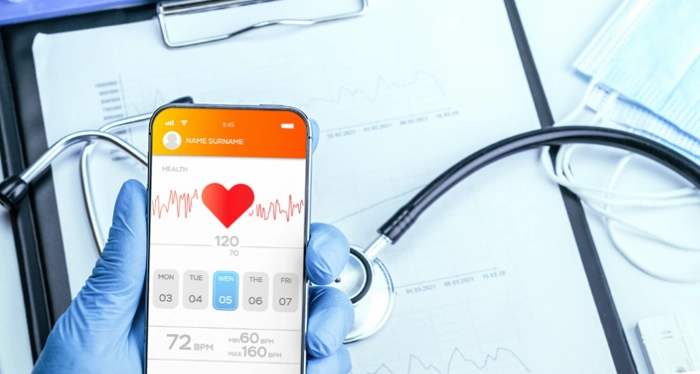
Optimizing Complaints Handling Through AI
Handling customer complaints effectively is vital for continued business success.
Know More
Resources
The Engineering Behind the Medical Devices You Trust
LTTS accelerates MedTech innovation with end-to-end engineering, connected devices, AI, compliance expertise, and intelligent manufacturing transformation.
Beyond Supplier Quotes: Redefining Cost Leadership in Pharma...
Explore how LTTS helps pharmaceutical manufacturers achieve cost leadership through supply chain intelligence, cost transparency, and procurement optimization.

LTTS Surgical Intelligence
LTTS Surgical Intelligence transforms surgical video into real-time insights, automating documentation, tracking instruments, and enhancing clinical workflows.

AI-driven Smart Endoscopy
LTTS' AI-driven Smart Endoscopy delivers real-time clinical intelligence via a software-defined, reconfigurable platform—enabling >90% detection accuracy and sub-15ms latency.
QAssure.Ai: LTTS’ AI-Powered QARA
QAssure.Ai by LTTS is an AI-powered QARA suite enabling predictive compliance, automated documentation, and audit readiness for MedTech leaders.

Medical Devices
here is a need for operational efficiency, both, from the product development and manufacturing process perspective.

Sustainable Supply Chains as the Next Growth Lever
Learn how Philips can turn sustainable supply chains and ESG‑aligned procurement into a powerful growth lever in the MedTech market with LTTS as an innovation partner.

Revolutionizing Medical Imaging with AI-Powered, Digital Sol...
The growing adoption of AI and cloud computing in medical imaging is increasingly becoming integral to the future of healthcare diagnostics. ...

ISG MedTech 2025 – Digital Engineering and Product Developme...
LTTS has been recognized as a Leader in MedTech - Digital Engineering and Product Development by the ISG Provider Lens™ report for 2025.

ISG MedTech 2025 – Regulatory Compliance, Strategy and Quali...
LTTS is proud to be recognized as a Leader in MedTech - Regulatory Compliance, Strategy, and Quality Assurance by the ISG Provider Lens® report for 2025.

Toward the Next Frontier: Engineering Self-Learning Medical ...
Self-learning medical devices, powered by AI, digital twins, and edge intelligence, enable adaptive, personalized, and anticipatory care, revolutionizing MedTech.
LTTS offers end-to-end medical device engineering across five areas: digital health, device and sustenance engineering, quality assurance and regulatory affairs (QARA), digital manufacturing, and AI in MedTech. We support OEMs from concept and design through verification, regulatory submission, manufacturing transfer and post-market. The goal is simple: faster time to market, lower operating cost and compliance built in, backed by more than 200 co-authored patents in medical technology.
Software as a Medical Device (SaMD) is software that performs a medical function, such as diagnosis or monitoring, without being part of a hardware device. It is developed under a regulated lifecycle, typically following IEC 62304, ISO 14971 for risk and IEC 62366 for usability. Validation proves the software meets its intended use. For AI-based SaMD, validation also covers data quality and model performance. LTTS brings hands-on experience from AI diagnostics such as Digital Twin, Visualization framework , Gesture control and Chest-rAi™.
LTTS helps manufacturers meet EU MDR and IVDR requirements through gap assessments, technical documentation support and EUDAMED UDI registration. For post-market surveillance, we run PMS and post-market follow-up, complaint handling, vigilance reporting, trend analysis and field actions such as recalls. The difference is closing the loop: we feed post-market data back into design, risk and quality decisions instead of treating it as a periodic reporting exercise.
Treat cybersecurity as a lifecycle discipline, not a pre-launch check. In design, that means threat modelling, security risk assessment, secure architecture and a software bill of materials (SBOM). Before release, it means security and penetration testing. After launch, it means vulnerability monitoring and timely patching. The FDA now expects this evidence in premarket submissions for cyber devices. LTTS builds these practices into your existing design control and quality processes.
LTTS supports the full device lifecycle with one engineering partner. In development, our teams cover system architecture, hardware, embedded software, mechanical design, usability, and verification and validation, with design history documentation built in from day one. In sustenance, we manage obsolescence, cost reduction, design changes and regulatory updates for products in the field. This frees internal R&D teams to focus on the next generation of products.
Start with a gap assessment. Since February 2, 2026, the FDA’s Quality Management System Regulation has incorporated ISO 13485:2016 by reference into 21 CFR Part 820. Priority areas include risk management across processes, design controls, supplier controls and inspection readiness. LTTS helps teams assess and remediate their QMS, configure eQMS workflows and strengthen CAPA, change control and audit management, so compliance becomes an everyday habit rather than a last-minute scramble.
Connected devices need testing across hardware, software, connectivity, cybersecurity and usability. Typical scope includes software V&V aligned to IEC 62304, IEC 60601 electrical safety and EMC, wireless coexistence, interoperability with apps and cloud platforms, penetration testing and human factors validation. LTTS supports test strategy, automation, protocols and reports, with full traceability to requirements and risks, so the evidence is ready for submission when you need it.
LTTS applies AI where it has a measurable impact. In diagnostics, Digital Twin, Chest-rAi™ helps radiologists separate normal from abnormal chest X-rays, and our software-defined endoscopy, built with NVIDIA, enables real-time image enhancement and polyp detection. In quality and regulatory work, QAssure.ai makes compliance more predictable. In engineering, AI speeds up design, testing and sustenance. Clinical and regulatory experts stay in control of every decision.