

Lights-out Factory
The LTTS Lights-Out Factory is a framework and an accelerator portfolio that moves manufacturing tasks up a measurable ladder of autonomy: from AI that advises your engineers, to AI that works beside them, to loops that close without anyone in them. Built on NVIDIA Omniverse and NVIDIA Isaac.
Autonomy isn't installed. It's earned, one loop at a time.
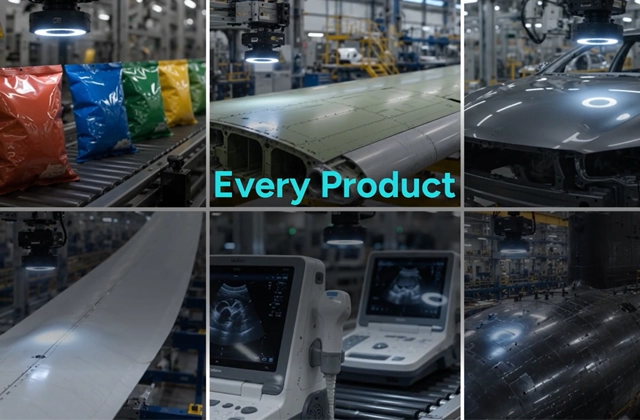
LTTS AI-Powered Vision Inspection
The Challenge
Your plant is not short of data. It is short of decisions that arrive before the scrap does.
Automation solved the repetitive work. It never solved judgement, and judgement is where the losses live.
The line stops and you find out afterwards. A changeover takes three shifts to settle. The one engineer who knows why the weld drifts is eighteen months from retirement. Every fix arrives after the cost has already been incurred.
Downtime you find out about too late
A large plant loses 27 hours a month to unplanned downtime. In automotive, one hour costs USD 2.3 million. (Siemens/Senseye, 2024)

Pilots that never leave the pilot cell
The demo works. The rollout doesn't. Even at WEF Lighthouse plants, the most advanced in the world, only 11% have scaled the technology across their network.

Judgement walking out the door
The people who know why a process drifts are retiring faster than you can replace them. Their knowledge was never written down anywhere a machine can read.

Simulation that does not match the floor
Layouts checked in CAD. Cells commissioned in isolation. PLC logic tested on a bench. The surprises show up on the real line, at the most expensive moment.

What It Does for You:
The Use Cases
Each use case sits at a specific rung. That is the point: a real factory is never at one rung everywhere, so the portfolio is deliberately spread across all three modes.


Machine health monitoring
Failure signals appear before the stoppage, so maintenance is scheduled rather than reacted to.

Where it runs
Automotive assembly line

Weld defect analysis
Defects surface in-cycle for engineering judgement, not at end-of-line audit.

Where it runs
Automotive components

Impact testing
The engineer reviews an interpreted result rather than raw test footage.

Where it runs
CFRP composites


Assembly time study
A continuous cycle-time baseline, without an observer holding a stopwatch.

Where it runs
Table-top assembly

Life cycle assessment
Impact assessed inside the engineering workflow, not audited after the design is frozen.

Where it runs
Sustainability engineering


Robot health oversight
Agents act on the fault and narrow the cause before an engineer opens a log.

Where it runs
Body-in-White line

Logistics time study
Movement measured continuously, with nobody on the floor to measure it.

Where it runs
Warehouse and logistics


Spot welding line twin
Line health and operations become visible and testable in one model.

Where it runs
Automotive

Motor gearbox twin
Rotating-asset condition and what-if scenarios modelled on physics, not on averages.

Where it runs
Industrial machinery

Water utility twin
Leaks located in a network model, extending the approach beyond the plant.

Where it runs
Utilities
Lights-Out Factory
Handpicked for You
What We Offer
The LTTS accelerators
Seven accelerators and three digital twins, deployed at the rung each task has earned.
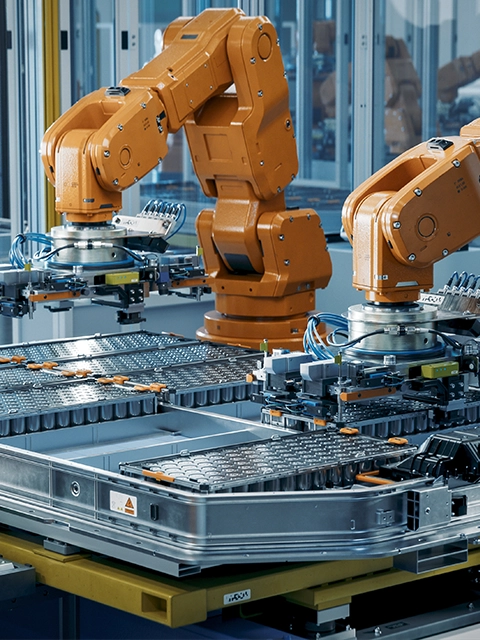
MECHA: AI-based machine health on temperature, speed, feed, energy and vibration.
Weld Defect: Computer-vision and AI weld defect analysis.
Impact IQ: Computer-vision and GenAI impact analysis.
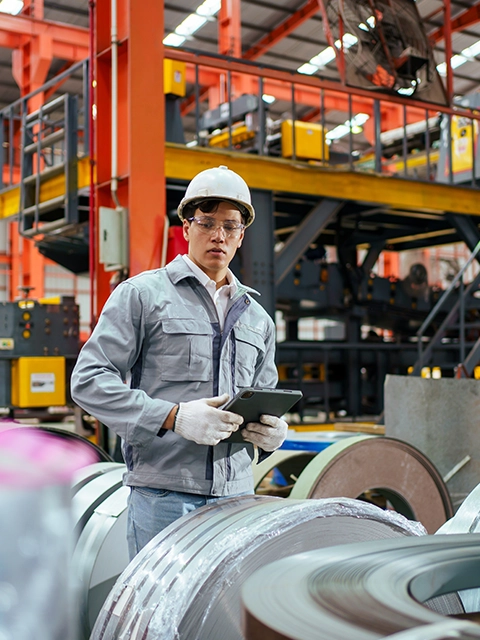
AI Assembly Tool: Computer-vision assisted time study.
LinkLCA: AI-assisted life cycle assessment.
AgeOps: Agentic operations: autonomous agents that monitor robot health and act.
iVision: GenAI-assisted time study, running unattended.
Equipment Digital Twin: Predictive maintenance and what-if analysis on a physics-integrated neural network.
Lights-Out Factory Twin: Machine health analysis and intelligent operations across the line.
City Digital Twin: Leak detection across a distribution network.
The LTTS Edge
Everyone will sell you a digital twin. Very few will tell you which tasks are ready to leave your hands.
The difference is not the technology stack. It is whether the engagement produces a defensible answer to 'what moves up a rung next, and how do we know?
Autonomy is scored, not sold: We assess every task on your line against the three modes and tell you which are ready to move. You get a ranked list, not a vision slide.
We optimise what the machine makes: Most providers tune the logistics around the machine. We start with the product and the process itself: Design for Manufacturing, not just line flow. The gains hold when your mix changes.
The twin is validated against your floor: Your live control systems run inside the model. What passes in simulation passes on the line.
Robotics is proven before it is bought: Navigation, manipulation and sensing are trained and tested in simulation, so behaviour is validated before it reaches hardware.
We work in your vendor reality: Your floor is twenty years of decisions across competing vendors. Making them work together is the offering, not a caveat to it.
Engineering depth behind the AI: The physics, the process and the product engineering are in-house. The model is built by people who understand the asset.
Track Record and Proof
One customer engagement, the interoperability work behind it, and the simulation capability it runs on.
One live twin across Paint, BIW and Final Assembly
North America-based automotive OEM
Legacy simulation and virtual-commissioning models converted into one live environment, with PLC, HMI and robot programs integrated for real-time virtual commissioning. Around 30% improvement in collaboration, visualisation speed and data consistency at POC stage.
Two toolchains made to behave as one
Siemens Tecnomatix and NVIDIA Omniverse
Missing assets, connector instability and interoperability gaps resolved into a single data layer. Paint shop layout, process simulation and virtual commissioning demonstrated end-to-end in one environment.
Robotics validated before it reaches hardware
LTTS CAPABILITY · built in-house
Quadruped navigation, humanoid reinforcement-learning training and bin-picking cobot simulation, with virtual LiDAR, IR and object-segmentation sensing modelled in NVIDIA Isaac Sim.
Success Stories
Driving Industrial Excellence Via LTwin
LTTS embedded first-principles engineering into AI for a wind farm operator—predicting crack initiation with 90% accuracy and 75% faster certification.
Know More
Engineering the Lights-Out Factory
Discover how LTTS unified automotive engineering with an OpenUSD digital twin, enabling collaboration, faster commissioning, predictive operations, and visibility.
Know More
Resources
A Factory That Decides for Itself Starts with One That Decid...
LTTS Lights-Out Factory combines digital twins, industrial AI, and agentic operations to enable autonomous, data-driven manufacturing decisions.
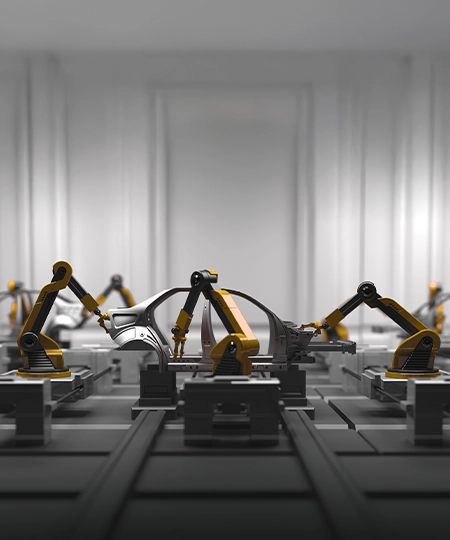
A Lights-Out Factory is a plant where production runs without human intervention: machines run, monitor and correct themselves while the lights are literally off. Almost no plant works this way end to end today, so in practice it is a direction rather than a destination. Factories get there by moving tasks up a ladder of autonomy, from AI that advises people, to AI that works alongside them, to loops that close on their own.
LTTS draws the line at one question: who closes the loop? A smart factory is connected and data-rich, but a person still reads the dashboard and makes the call. In a Lights-Out Factory, the loop closes without waiting for anyone. Smart manufacturing gives you visibility. Autonomous manufacturing gives you a decision. LTTS moves plants from one to the other, task by task.
LTTS uses AI for predictive maintenance rather than reactive repair. The MECHA accelerator tracks temperature, speed, feed, energy and vibration to predict machine health, so maintenance is scheduled instead of emergency. AgeOps agents go further, monitoring robot health and acting on faults to speed up root-cause analysis. A large plant loses around 27 hours a month to unplanned downtime.
LTTS applies the Lights-Out Factory framework wherever a process can be modelled and measured. The deepest proof is automotive: body-in-white, paint shop, spot welding and final assembly. LTTS also works in industrial machinery through equipment digital twins for rotating assets, in composites through AI-assisted impact testing, and across logistics and utilities. The framework is sector-neutral; the accelerators are tuned to the sector.
LTTS targets the numbers a plant leader owns: less unplanned downtime, shorter cycle times, fewer defects found late, and capital committed only after it is proven in simulation. In one engagement with a North America-based automotive OEM, LTTS delivered around 30% improvement in collaboration, visualisation speed and data consistency at proof-of-concept stage.
LTTS builds Lights-Out Factory operations one loop at a time. The engagement runs in four stages: Assess, Build, Operate and Sustain. LTTS scores every task on your line against three modes of autonomy, builds a validated digital twin of the real production system, then deploys AI accelerators at the level each task has earned. A task only moves up when the evidence supports it. Autonomy is earned, not installed.
LTTS treats the digital twin as the foundation everything else runs on. It is a validated virtual model of your plant where AI learns your actual process, a change is tested before it costs anything, and a decision is proven before it reaches a real machine. Without a digital twin, autonomous manufacturing has nowhere safe to fail.
LTTS engineers across the mixed-vendor environments real factories run on, not a single preferred stack. For a North America-based automotive OEM, LTTS converted legacy simulation and virtual-commissioning models into one live environment, integrating PLC, HMI and robot programs for real-time virtual commissioning. Integration is part of the offering, not an exception to it.
LTTS builds its Lights-Out Factory framework on NVIDIA Omniverse and NVIDIA Isaac. Omniverse is the shared environment where simulation models, plant layouts and live control systems come together as one digital twin. Isaac Sim and Isaac Lab are where LTTS trains and validates robotics, from navigation to bin-picking, before anything reaches real hardware. LTTS presented this work jointly with NVIDIA at GTC 2026.