
Published on 26 Feb 2026
min read
Views
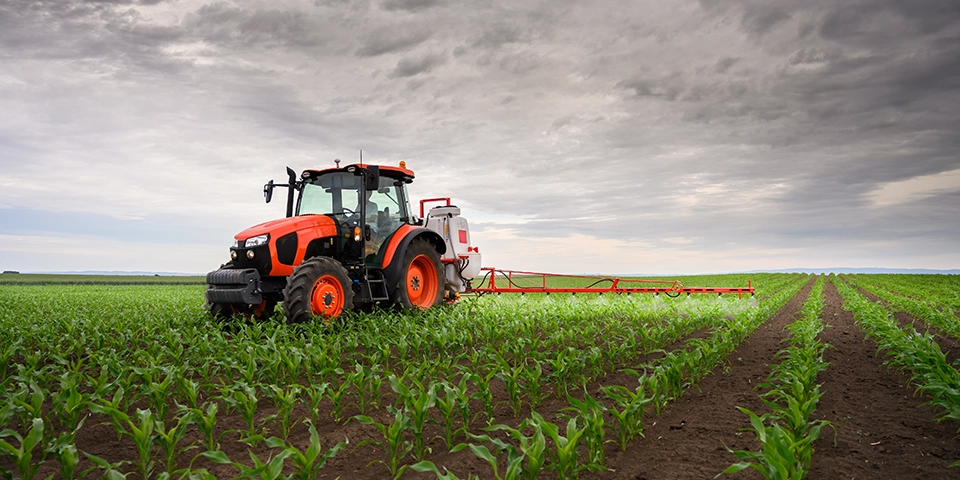
Autonomous Off-Highway Vehicles (OHVs) have found extensive (and lucrative) applications in diverse industries like agriculture and mining. From exploration, to digging, spreading, harvesting, and precision agriculture, autonomous OHVs offer a strong financial imperative for businesses to aggressively scale adoption. Underpinning this shift is artificial intelligence — the perception, decision-making, and continuous-learning engine that allows these machines to sense their surroundings, interpret complex terrain, and operate safely with minimal human intervention.
However, the motive for adoption is not just financial. OHVs are also turning mining and agriculture from high-risk environments to risk-mitigated, safer spaces for onsite workers. In allowing market entry and when making investments, regulators and buyers will often reflexively ponder upon ethical and governance dimensions of autonomous OHV adoption.
Let us a detailed look at the safety and ROI outcomes enabled by autonomous OHVs, and how ethical considerations will inevitably affect purchase decisions – and how OEMs should navigate the landscape.
The Upsides of Autonomous OHVs in Mining and Agriculture
#1. Transforming high-risk sites into managed risk zones
One of the strongest arguments in support of autonomous OHV adoption in mining and agriculture is their impact on safety. Autonomous OHVs reduce worker exposure to some of the most dangerous conditions in these two industries, including haul roads with heavy truck traffic, deep excavation sites, and large fields where fatigue-related errors can cause costly accidents.
Capabilities like auto navigation, auto operations (digging, trenching, etc.) implemented through perception and localization layers help in driving fewer collision incidents and improved compliance with site safety protocols in mines. In agriculture, adherence to standards such as ISO 18497 ensures that the machines can detect and respond to obstacles, protecting workers, livestock, and nearby property. These perception and localization layers are powered by AI-based computer vision and sensor fusion, where deep-learning models continuously interpret data from cameras, LiDAR, and radar. In turn, this helps detect obstacles, classify hazards, and anticipate the movement of workers, livestock, and other vehicles in real time – Engineering Intelligence at work!
Unlocking safety benefits under vehicle autonomy
However, autonomy does not erase risk, since safety performance ultimately depends on robust operational design domains (ODDs), well-trained remote operators, site planning (in mining scenarios), and a disciplined maintenance of sensors and control systems. Lapses in calibration or communication links can erode the outcome, calling for rigorous site integration, continuous monitoring, and transparent reporting. AI reinforces this foundation through predictive maintenance and anomaly detection, where machine-learning models flag sensor drift, calibration errors, or degrading components before they can compromise safe operations.
#2. Payback on autonomous OHVs: attaining sustainable productivity benefits
For buyers, the payback from autonomous OHVs will be spread across operational cycles. However, the benefits will be spread across the balance sheet, maintenance schedules, production output, and so on.
In mining, autonomous OHVs enable consistent cycle times, reduce idle hours, and drive higher equipment utilization. This can lower cost-per-ton by double digits, especially when coupled with optimized dispatching.
In agriculture, autonomous OHVs enable reduced overlaps, fewer missed patches, and fuel savings through sub-inch guidance and fatigue-free operation.
ROI from autonomy requires scale, integration, and patience
Ultimately, adopters will realize the increase in ROI through autonomous vehicles – but the velocity to payback will depend on scale and integration. Deploying a handful of autonomous units without harmonizing workflows or maintenance support can delay this end goal.
Full ROI will emerge when autonomy is embedded into site-wide planning, including, haul scheduling in mines, multi-pass harvesting in farms. This can help unlock extended shift coverage and better asset longevity in the two industries, when combined with site autonomy. As autonomous deployments scale, AI at the edge helps coordinate vehicles optimizes task execution. In tandem, AI in operations continuously improves operational efficiency through insights derived from accumulated fleet data. Combined, this allows productivity gains to compound over time rather than remain limited to individual vehicle performance.
For executives, the takeaway is clear: autonomy delivers its full ROI when treated as a long-term operational strategy, measured through sustained gains in efficiency, cost control, and asset performance.
Governance and Trust: Decision Factors in Autonomous OHV Procurement
For buyers, investing in autonomous OHVs is not just a technological decision. It is a commitment that affects operations, workforce, and long-term strategic flexibility. Beyond safety and ROI, procurement teams and boards will also need to scrutinize how a vendor addresses governance issues. For example, who owns the data? Or how transparent is the technology?
We should also look at the need for interoperability between various OEMs. Autonomous vehicles from one OEM are currently cannot be integrated with another OEM – a scenario that poses a challenge, especially in large mining sites with multiple OEM machinery in use.
What needs to be remembered is that equipment buyers will expect clarity on data rights and the confidence that they will not be locked into costly service dependencies. They will look for assurance that the technology partner can navigate both social and regulatory expectations. Below are some of the key areas where OEMs can either build or break trust.
Data Stewardship
Granular datasets on operations, environment, and performance are among the biggest value drivers for autonomous OHVs. OEMs that provide clear, contractually defined policies on data collection, storage, and exportability position themselves as enablers of operational independence, not gatekeepers. This data is critical to the continuous improvement of autonomous systems, influencing how AI models are trained, validated, and refined over time.
As autonomy becomes increasingly intelligence-driven, transparency around data usage will become an important procurement consideration.
Repair and Update Control
While buyers value the security of certified software update pipelines, they will be apprehensive of service models that overly restrict repair rights. Thus, OEMs that offer tiered access models or certified third-party repair options will send a strong message of partnership to their clientele. And as software and AI capabilities evolve after deployment, buyers will also increasingly expect visibility into how updates are validated, what changes are introduced, and how those changes affect vehicle behaviour in operational environments.
Workforce Transition
With the deployment of autonomous OHVs, labour shifts are inevitable. OEMs can turn this prospect into a differentiation strategy, driving the embedding of training, re-skilling, and human–machine teaming into deployments to help minimize disruption and community pushback. This also constitutes a valid reason for moving toward autonomy.
Lastly, incidents will happen. That is why clear liability models, investigation protocols, and reporting processes will be strongly valued by large-account buyers and build confidence in the OEM’s risk management strategy.
OEMs that address these elements transparently will not only reduce operational uncertainty but also strengthen buyer trust while meeting insurer and regulatory expectations.
Summing up
Autonomous OHVs are redefining safety, productivity, and governance in mining and agriculture, but long-term success hinges on more than technology. OEMs that combine proven safety gains and measurable ROI with transparent governance, fair data practices, and workforce transition planning will lead adoption.
In other words, those who treat autonomy as both an operational and trust-building strategy will be the leaders in the fast-growing autonomous OHVs market. Autonomy in mining and agriculture, therefore, will not be won by the safest machines or the cheapest ones, but rather, by the OEMs that can prove ROI, earn trust, and operationalize governance at scale.