Home

Search


Header (Main)
Industry
Mobility Mobility
Automotive
Driving The Future Of SDV

Driving the Future of SDV

Explore
Aerospace
AI-Enabled Aircraft Health Monitoring for Predictive Maintenance

AI-enabled Aircraft Health Monitoring for Predictive Maintenance

Explore
Railway
Engineering Next-Gen Rail Mobility

Engineering Next-Gen Rail Mobility

Explore
Commercial & Recreational Vehicles
Reinventing the Recreational Vehicle

Reinventing the Recreational Vehicle

Explore
Off-Highway Vehicles
Off-highway Vehicles and Machines

Off-highway Vehicles and Machines

Explore
AI in Mobility

Artificial Intelligence in Mobility

Explore
Sustainability Sustainability
Discrete Manufacturing & Industrial Products
Building Technology & Smart Infrastructure
Electrical Power and Controls
Industrial Machinery
LTTSGridEyeTM

LTTSGridEye™

Explore
Process Manufacturing
Oil & Gas
Chemicals
FMCG
ISG: Oil & Gas Industry Services and Solutions – AI and Cloud – Americas

Leader in ISG Provider Lens™ : Oil and Gas Industry - AI and Cloud - NA

Explore
L&T Technology Services, Siemens Partner for AI-led Transformation in Process Engineering & Smart Manufacturing

LTTS, Siemens Partner for AI-led Transformation in Process Engineering & Smart Manufacturing

Explore
Tech Tech
Data Centers
LTTS Data Center Services - From the Chip to the Grid!

LTTS Data Center Services - From the Chip to the Grid!

Explore
HiTech
Consumer Electronics
Media & Entertainment
NexGen Comms
Semiconductors
Automated Ad Integration and Delivery Validation

Automated Ad Integration and Delivery Validation

Explore
MedTech
L&T Technology Services Transforms Respiratory Diagnostics with NVIDIA AI-Powered Digital Twin Technology

LTTS Transforms Respiratory Diagnostics with NVIDIA AI-Powered Digital Twin Technology

Explore
Public Infrastructure & Smart Cities
Integrated Smart Surveillance Project

Integrated Smart Surveillance Project

Explore
Software & Platforms
LTTS & SymphonyAI to provide AI-based transformation

LTTS & SymphonyAI to provide AI-based transformation

Explore
Unlocking PLxAI with Alind Saxena

Unlocking PlxAI with Alind Saxena

Explore
Explore Our Solutions Explore Our Solutions
Services
Digital Engineering & Consulting Digital Engineering & Consulting
Artificial Intelligence
Cybersecure
Security Monitoring
Security Operation Center
Security Services
Security Solutions
EI Readiness Advisory
Immersive Experiences
Industry 4.0
Private Equity
Product Consulting
Sustainability Engineering
Sustainable Smart World
5G
Pragmatic by Design: Engineering AI for the Real World

Pragmatic by Design: Engineering AI for the Real World

Explore
Product Engineering Product Engineering
Software Engineering
Cloud Engineering
DevOps
Engineering Analytics
Immersive Experiences
Sustenance & Maintenance
User Experience
Voice Innovations
Embedded Engineering
Embedded Systems
Sustenance
VLSI
Wearables Engineering
Mechanical Design
CAE & CFD
CAx Automation
Testing & Validation
Integrated Design, Validation & Testing
Lab as a Service
Testing
ISG: Automotive and Mobility Services and Solutions – Automotive Engineering and Manufacturing Services – North America

Leader in ISG Provider Lens™ : Automotive and Mobility Services and Solutions - NA

Explore
Manufacturing Engineering Manufacturing Engineering
Smart Manufacturing
Accelerated Operations
Digital Factory & Simulations
Plant Design & Engineering
Supply Chain Engineering
Sourcing & Procurement
Manufacturing & Planning
Accelerated Operations
Digital Factory & Simulations
Line Expansion & Transfer
Plant Design & Engineering
PLM on Cloud
Manufacturing Execution
Material & Parts Management
Sourcing & Procurement
L&T Technology Services Transforms Respiratory Diagnostics with NVIDIA AI-Powered Digital Twin Technology

LTTS Transforms Respiratory Diagnostics with NVIDIA AI-Powered Digital Twin Technology

Explore
Plant Engineering Plant Engineering
CAPEX Project E/EPCM Services
Operational Excellence
Plant Sustenance & Management
Material & Parts Management
Regulatory Compliance Engineering
ISG: Oil & Gas Industry Services and Solutions – AI and Cloud – Americas

Leader in ISG Provider Lens™ : Oil and Gas Industry - AI and Cloud - NA

Explore
Explore Our Solutions Explore Our Solutions
Solutions
AnnotAI
ARC
Asset Health Framework
CHEST-rAi™
Connected Security
FlyBoard®
Fusion
i-BEMS
Nliten
PSM
SafeX
UBIQWeise 2.0
Insights
Analyst Reports
Blogs
Brochures
Case Studies
eBooks
Events
Podcasts
PoVs
Videos
Webinars
Whitepapers
Careers
About Us
Accolades
Alliances
Analysts
Board of Directors
CSR
Engineer At Heart
Engineering The Change
Innovations
Investors
Nearshore Centers
News & Media
Quality Management
Corporate Sustainability
Testimonials
Contact
Header (Secondary)
Search
Mail
  • English
  • Deutsch
  • 日本語
  • Svenska
Contact

Breadcrumb

  1. Blogs
  2. Industry
  3. Are Humanoid Robots Ready for the Factory Floor – or Is the Industry Rushing Too Fast?

Are Humanoid Robots Ready for the Factory Floor – or Is the Industry Rushing Too Fast?

Muralidharan K
Muralidharan K

Global Head of Digital Manufacturing Services, LTTS

Digital Manufacturing

Published on 03 Sep 2026

min read

19

Views

LTTS

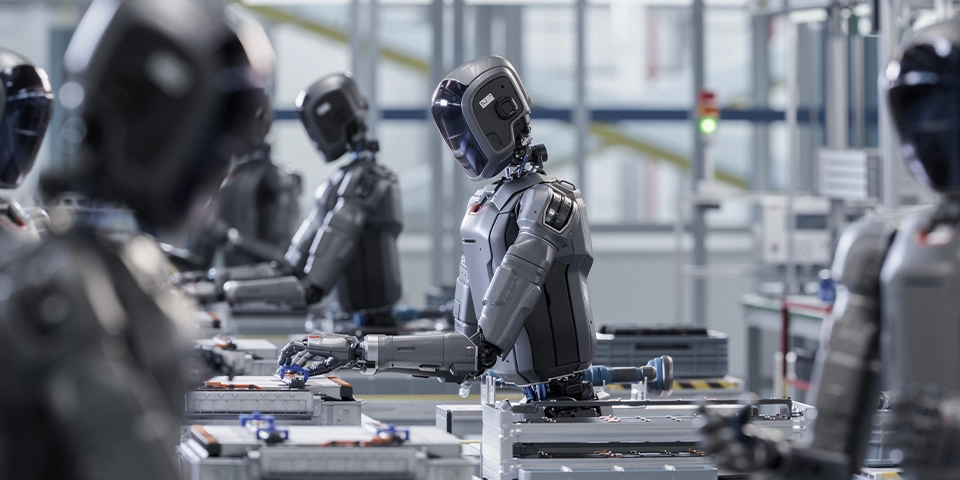
Humanoid robots are making headlines worldwide with announcements of factory pilots, production ramp-ups, and ambitious scaling targets from companies such as Tesla, Boston Dynamics (in partnership with Hyundai), Figure AI, Agibot, and BYD. But for many more manufacturers, the main question remains: Is now the “right” time to invest such significant capital, or should we wait until the technology reaches adequate maturity and presents clearer proof of sustained value?

So, to evaluate whether humanoid robots are ready or the industry is rushing too fast, we will need to ask and get answers to the most pressing questions, especially about humanoid robots’ technical readiness, the actual meaning of being factory-ready, scaling risks, and more.

Are Humanoid Robots Technically Ready for Real Deployments?

One way of answering this question is to take a page out of NASA’s handbook. Their Technology Readiness Level (TRL) scale can provide an objective measure, ranging from TRL 1 (basic principles) to TRL 9 (proven through successful mission operations).

In early 2026, leading humanoid platforms predominantly show TRL 6-7 capabilities, which is basically a model or prototype demonstrating in a relevant environment. Frontrunners, Boston Dynamics' electric Atlas, unveiled at CES 2026, demonstrates TRL 7-8 capabilities with autonomous battery swapping and industrial task pilots at Hyundai facilities, targeting phased deployment through 2028. Tesla's Optimus advances toward internal scaling, with pilots in controlled settings but not yet at full operational proof. Figure 02 completed extended shifts at BMW, and Chinese manufacturers report thousands of units manufactured, with select application in controlled production environments approaching TRL 8.

However, achieving broad TRL 9 – full operational capability in dynamic, high-throughput factories still remains elusive. Battery endurance (typically 2–4 hours, with Atlas achieving ~4 hours via swappable packs), real-world dexterity for variable tasks, and reliability drops outside labs (e.g., from 95% to 60% accuracy) keep most systems below mature levels. Gartner notes that hype outpaces readiness, with fewer than 20 companies likely scaling to production by 2028, mostly in tightly controlled environments.

The bottom line is that the current deployments show progress but fall short of widespread industrial maturity. So, before committing to major investments, factory owners should consider demanding TRL 8+ evidence in analogous factory settings.

What “Factory-Ready” Actually Means? 

"Factory-ready" demands more than impressive demos or limited pilots. It requires solving real problems, such as:

  • Reliability and uptime: Consistent performance across full shifts (8–20+ hours) with minimal intervention, including autonomous recovery from failures.
  • Efficiency and economics: Cycle times, energy use, and throughput competitive with or superior to existing automation, plus total cost of ownership (TCO) justifying investment.
  • Safety and integration: Seamless operation in shared human spaces without extensive guarding, plus compatibility with legacy systems and workflows.
  • Versatility: Ability to handle multiple, variable tasks in unstructured or semi-structured environments without constant reprogramming.

Currently, most humanoids excel in controlled pilots, such as sequencing parts and handling sheet-metals, but struggle with full-shift autonomy, high-throughput demands, and edge cases. 

Additionally, battery constraints necessitate infrastructure for swaps or charging, dexterity limits precision in complex manipulation, and AI-driven generalization remains inconsistent in unpredictable settings. Gartner's assessment highlights that these issues cause large-scale, dynamic supply-chain use lags, confining production deployments to narrow, verifiable scenarios.

True factory-readiness arrives when these criteria are met at scale, going beyond impressive prototypes or early adopters’ experiments.

Are Humanoids Ready to Surpass Already-Deployed Alternatives?

Humanoids promise human-like flexibility in human-designed spaces, but alternatives deployed on the factory floors are delivering superior value today.

Traditional industrial robots excel in high-speed, high-payload, repetitive tasks with proven TRL 9 maturity, fenced safety, and optimized throughput. They outperform in dedicated lines. However, when it comes to adaptability, they can be difficult without redesign.

Collaborative robots (cobots) enable safe human interaction, quick redeployment, intuitive programming, and lower entry costs (USD 25,000–75,000 range, depending on payload class and vendor). They suit medium-variety, lower-volume work with faster ROI (often 6–18 months) but trade off speed and heavy lifting.

Humanoids target general-purpose versatility, navigating legacy layouts and learning via observation. It has the potential for a broader range of tasks without changing fixtures or requiring redesign. However, its drawbacks, including higher complexity, shorter runtime (hours vs. continuous), elevated costs, and unproven economics at scale, remain.

Manufacturers in 2026 prefer cobots and traditional robots for most throughput-critical or precision tasks. But humanoids will shine for those who will need flexibility over speed.

What Are the Risks of Premature Scaling?

Rushing with humanoid adoption carries tangible downsides, including:

  • Technical debt: Early deployments in immature states lead to frequent downtime, rework, and data-collection dependency on humans, inflating costs.
  • Capital lock-in: High upfront investment (hardware, integration, training) ties resources to unproven platforms, diverting from mature automation yielding immediate returns.
  • Safety and regulatory exposure: Unresolved collision risks or fall hazards in shared spaces will cause incidents, scrutiny, or delays.
  • Hype cycle correction:Gartner and other industry analysts warn of overcommitment amid hype; failures could erode confidence and funding.

Evidence from 2026 shows pilots succeeding in narrow scopes – such as BMW with Figure, Hyundai with Atlas. But scaling to dynamic operations remains limited. 

Where Do We Stand?

While humanoid robots are not yet universally factory-ready, the ongoing advancements are not just speculative experiments. They are progressing steadily up the readiness curve, demonstrating value in controlled environments while exposing the engineering gaps that still separate pilots from production-scale deployment.

Transformation will not come from more impressive demonstrations. It will come from disciplined systems engineering: robust validation frameworks, safety certification pathways, lifecycle cost modeling, digital twins, resilient battery strategies, and scalable integration architectures. Factory readiness is now an operational milestone.

The industry needs to accelerate with structure, and this means piloting where flexibility delivers measurable advantage, validating against production-grade benchmarks, integrating within existing automation ecosystems, and scaling only when performance evidence justifies it. And consequently, factories of the next decade will likely include humanoids, mainly because engineering rigor earned them that place.

Relevant Blogs

Smart Content Creation: How AI Automates Technical Documentation and Manuals
Industrial Automation Is Evolving: Robotics Alone Is Not Enough
Humanoids in Manufacturing: Hype, Reality, and the Road Ahead
Explore All

Stay Relevant With Us

Subscribe to our blogs

Muralidharan K
Muralidharan K

Global Head of Digital Manufacturing Services, LTTS

Muralidharan K is the Global Head of Digital Manufacturing Services at L&T Technology Services (LTTS), leading global initiatives that help manufacturers accelerate digital transformation through smart factories, Industry 4.0/5.0, IT/OT convergence, MES, automation, robotics, and digital twin technologies. With over two decades of experience in engineering and digital transformation, he works closely with global manufacturing leaders to drive operational resilience, portfolio innovation, and measurable business outcomes. Known for his people-first leadership approach, he is passionate about building future-ready organizations where people, process, and technology evolve together.

Footer Navigation
  • Industry
    • Mobility
      • Aerospace
      • Automotive
      • Railway
      • Trucks & Off-Highway Vehicles
    • Sustainability
      • Discrete Manufacturing & Industrial Products
      • Process Manufacturing
    • Tech
      • Data Centers
      • Consumer Electronics
      • MedTech
      • Media & Entertainment
      • NexGen Comms
      • Semiconductors
      • Software & Platforms
      • Public Infrastructure & Smart Cities
  • Services
    • Digital Engineering
      • Artificial Intelligence
      • Cybersecure
      • Security Monitoring
      • Security Operation Center
      • Security Solutions
      • Security Services
      • EI Readiness Advisory
      • Immersive Experiences
      • Industry 4.0
      • Private Equity
      • Product Consulting
      • Sustainability Engineering
      • Sustainable Smart World
      • 5G
    • Product Engineering
      • CAE & CFD
      • CAx Automation
      • Software Engineering
      • Cloud Engineering
      • DevOps
      • Embedded Systems
      • Engineering Analytics
      • Integrated Design, Validation & Testing
      • Lab as a Service
      • Sustenance
      • Testing
      • Testing & Validation
      • User Experience
      • VLSI
      • Voice Innovations
      • Wearables Engineering
    • Manufacturing Engineering
      • Accelerated Operations
      • Digital Factory & Simulations
      • Line Expansion & Transfer
      • PLM on Cloud
      • Plant Design & Engineering
      • Sourcing & Procurement
    • Plant Engineering
      • CAPEX Project E/EPCM Services
      • Material & Parts Management
      • Operational Excellence
      • Plant Sustenance & Management
      • Sourcing & Procurement
      • Regulatory Compliance Engineering
  • Engineering The Change
  • Careers
  • Engineer at Heart
  • Resources
  • Solutions
    • Ainfonix™
    • AiNEXUS™
    • AnnotAI
    • CHEST-rAi™
    • eVOLTTS
    • FleetNEXUS™
    • i-BEMS
    • LTTSiDriVe™
    • LTwin
    • Lung Digital Twin
    • PLxAI
    • QAssure.ai
    • TrackEi™
    • View all Solutions
  • About Us
    • Accolades
    • Alliances
    • Board of Directors
    • Innovations
    • Investors
    • Nearshore Centers
    • Testimonials
LTTS
  •  Twitter
  •  LinkedIn
  •  YouTube
  •  Facebook
  •  Instagram
  • Copyright & Terms
  • Privacy
  • Sitemap
  • info@ltts.com

© 2026 L&T Technology Services Limited. All Rights Reserved.