
Published on 05 Feb 2026
min read
Views
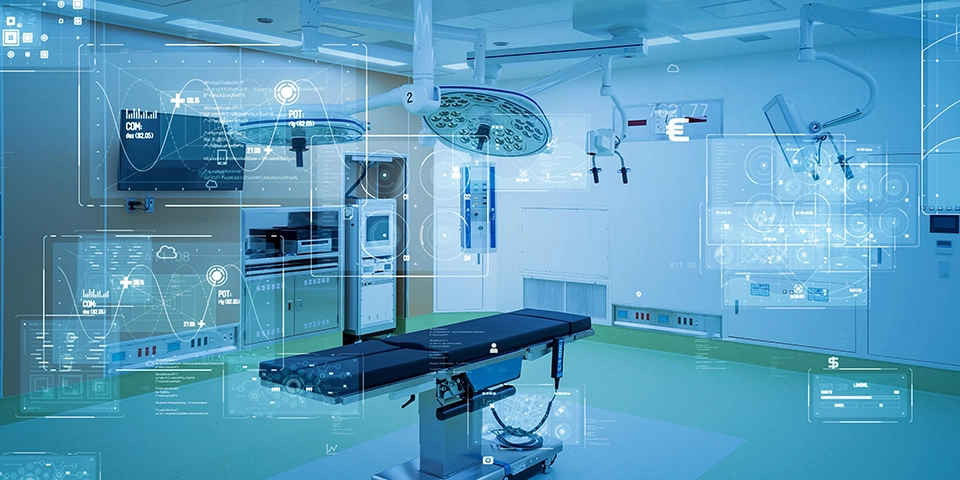
In 2026, what once felt like future trends in MedTech will become everyday engineering reality.
And the transformation is already evident.
Digital health is increasingly the new core in care delivery, while AI pilots across the medical landscape are being scaled into validated workflows. Regulatory requirements, especially in the EU, are entering a new era of traceability and transparency. And heightened market expectations – especially around device engineering, product sustenance, and digital manufacturing – are reshaping how quickly, safely, and efficiently MedTech majors scale toward continued delivery of sustainable value.
The challenge, therefore, is stitching these forces together into a coherent operating model that supports innovation, ensures compliance, and drives business agility and success.
Digital Health Matures into True Care Infrastructure
Digital health has crossed an important threshold, evolving from being in an experimental domain sitting adjacent to the medical device ecosystem to becoming the ecosystem for tomorrow. Global forecasts show digital health continuing its strong upward trajectory, with over 20% CAGR in 2026, driven by remote monitoring, hybrid care models and data analytics platforms.
But what makes 2026 different is the shift in expectations. Health systems, payers, and clinicians now want connected solutions that clearly improve patient outcomes and operational efficiency. Next-gen solutions need to integrate into EHRs, comply with interoperability standards like the FHIR, and offer secure, scalable data architectures while supporting longitudinal evidence generation.
This places fresh demands on engineering services, across
- Devices that must be secured and made update-ready across longer lifecycles,
- Data pipelines that need to be strengthened to ensure privacy and maintain fidelity from edge to cloud, and
- Clinical workflow integration that is built-in, rather than bolted-on.
For MedTech companies digital health, therefore, is now a long-term evidence and lifecycle engineering challenge, not a one-time launch milestone.
Device and Sustenance Engineering: The New Center of Product Performance
Device engineering in 2026 spans far more than just upfront product development. With connected care scaling rapidly, engineering teams are now responsible not only for what ships, but for how devices behave over years of real-world use.
The Internet of Medical Things (IoMT) continues to expand, with connected sensors, implants, wearables and diagnostics generating clinical-grade data at unprecedented depth and frequency. Analysts forecast sustained growth across this segment, to tune of over 25% CAGR, powered by surgical IoT applications, chronic disease management and remote care expansion.
As connectivity becomes a defining feature, engineering is evolving into a continuous discipline, spanning:
- Cybersecurity and firmware resilience requiring routine patching and threat monitoring,
- Telemetry and data quality frameworks to support real-world evidence without burdening clinicians, and
- Predictive maintenance and smart field service models for reducing downtime and optimizing device uptime.
Consequently, leading global MedTech players are shifting to a lifecycle engineering ethos encompassing continuous validation, data-driven enhancements, controlled updates, and tight regulatory alignment. This approach is especially critical for devices integrated into hospital IT infrastructure or those supporting high-acuity workflows.
QARA in 2026: From Compliance to Strategic Assurance
Worldwide, regulatory compliance requirements continue to accelerate, and 2026 could be a pivotal year, especially for companies operating in the EU.
By 28 May 2026, the first four functional modules of EUDAMED, including actor registration, UDI/device registration, notified bodies and certificates, and market surveillance, will become mandatory. Manufacturers would need to maintain complete, accurate, continuously updated regulatory data.
For most organizations, this represents a significant operational shift. QARA teams, therefore, need to work in tandem with engineering, IT, and quality functions to ensure that:
- Data governance is robust and audit-ready,
- Device master data and certificates flow automatically into regulatory systems, and
- Evidence planning and validation start early in the development lifecycle.
Regulatory teams are also increasingly “shifting left,” embedding themselves into early engineering discussions, identifying safety and performance metrics upfront, aligning verification and validation strategies and preparing evidence generation frameworks well before market submissions. What emerges is a more integrated model of strategic assurance, where regulatory readiness and product readiness move together from concept to lifecycle sustainment.
Artificial Intelligence: Embedded, Governed, and Operational
AI is now threaded through the entire MedTech value chain. What used to be isolated proof-of-concepts has matured into regulated, monitored and clinically integrated systems. And according to industry insights, the majority of MedTech executives now view AI as a core growth driver rather than a niche technology.
In 2026, AI can be expected to drive:
- Robust product design and systems engineering, accelerating simulations, design trade-offs, and requirements traceability,
- Reliable diagnostics and workflow augmentation, improving imaging accuracy, triage workflows, and predictive analytics, and
- Revitalized Quality and compliance, detecting anomalies in manufacturing lines, automating investigations, and analyzing post-market performance.
But with great capabilities come greater responsibilities.
Regulators worldwide are focusing on model transparency, lifecycle validation, bias mitigation, and continuous monitoring, especially with the rise of GenAI and foundation models. This places a new burden on engineering, QARA and clinical affairs teams. AI cannot be governed in a vacuum, and model governance needs to become a part of the standard product lifecycle, with clear ownership, traceability, and field performance monitoring.
Digital Manufacturing: Flexibility Meets Traceability
Manufacturing is undergoing one of its most significant transitions in decades. Digitalization, powered by automation, digital twins, robotics and real-time quality analytics, is enabling manufacturers to scale with precision and flexibility previously unattainable.
Research indicates that modular, connected manufacturing environments are becoming the new norm for high-mix, low-volume MedTech production, with key advantages across:
- Digital thread traceability, linking design, process controls, inspection, and field feedback,
- Faster changeovers and mass customization, essential for patient-specific and small-batch products, and
- Predictive quality systems, identifying issues before they create defects or inefficiencies.
For global device makers, digital manufacturing is, therefore, increasingly a regulatory advantage as well. When engineering, QARA and manufacturing teams operate through a unified digital backbone, auditability improves, documentation strengthens and continuous compliance becomes far easier to maintain.
Conclusion: Leading toward an Integrated, Intelligent Future
In 2026, MedTech innovation is no longer defined by excellence in isolated domains, but by the strength of the systems that connect them. Digital health, AI, QARA, device sustenance, and digital manufacturing are converging into a unified operating model, one that demands continuous validation, real-world evidence, and operational resilience.
This is also setting the stage for the next evolution.
As intelligence becomes embedded, governed, and operational across the MedTech stack, software is no longer confined to screens, dashboards, or back-end analytics. Increasingly, it is taking a physical form, moving through hospitals, assisting clinicians, navigating workflows, and interacting directly with care environments.
Automation is beginning to leave the factory floor and enter the clinical floor.
The question, therefore, is no longer whether robotics will play a role in care delivery, but how deliberately it will be designed, deployed, and scaled. What began with specialized surgical systems is now expanding into logistics, disinfection, telepresence, and early humanoid assistance, reshaping how care teams operate, how hospitals operate, and how clinicians spend their time.
In a subsequent blog, we will be exploring this shift in detail, charting the journey from assistance to autonomy, examining how robots and humanoids are becoming a foundational layer of modern healthcare infrastructure.