MedTech


Executive Summary
LTTS engineered the digital thread across the whole span of a network rollout: a web and mobile Activity Management System for construction and installation progress, a portfolio of site-supervision tools the client later migrated into its own deployment platform, and a customer portal for close-out package acceptance.
Read the Full Case Study. Anytime, Anywhere
Download Case StudyClient Challenge
A ramp does not fail loudly. It fails one unresolved part at a time, and each one still open holds the line below volume. Headcount does not compress this. The constraint is the order in which technical calls have to be settled, IQ, OQ and PQ definition, drawing gaps, supplier readiness, before anything can move forward. With suppliers at uneven levels of maturity, the least prepared one sets the pace for everyone. The client needed those decisions running in parallel, traceability held inside PLM, and a supplier base left ready for the product after this one.

Engineering Complexity - Why It Was Hard
APQP looks like a documentation exercise until you try to accelerate it.

A drawing gap stops everything downstream
Ballooned drawings with missing parameters cannot be measured against, so the supplier cannot produce a valid layout, so the PSW cannot be raised. One unresolved dimension can hold a part for weeks and nobody notices until the ramp does.
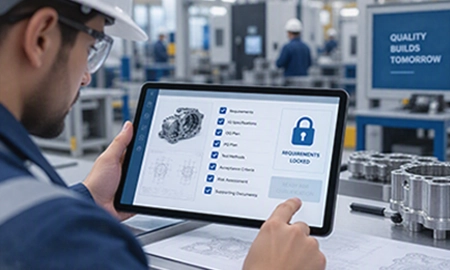
Qualification requirements have to be locked before qualification starts
IQ, OQ and PQ definitions must be finalised against real feasibility constraints, not ideal ones. Define them too tightly and suppliers cannot meet them, too loosely and the evidence does not survive audit.

Supplier maturity is uneven and the standard is not
Thirteen suppliers means thirteen different levels of PFMEA and control plan literacy, all being held to one regulatory bar. The work is technical assistance as much as it is review.
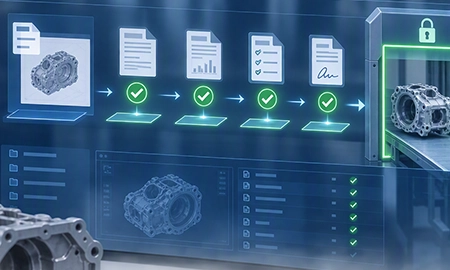
PLM is the gate, not the filing cabinet
A part is only progressed when its PSW is approved in the system. That makes document validation a critical path activity rather than an administrative trailer.

End to end APQP planning and execution
APQP defined and executed for 300+ parts with Level 4 completion focus on critical components, so rigour was concentrated where failure would actually hurt rather than spread evenly and thinly.

Supplier feasibility and technical alignment
13+ suppliers engaged to drive feasibility studies and align on technical requirements ahead of qualification, which is what stops rework at the submission stage.

SRPQP development and early design gap resolution
detailed layout plans built from drawings and specifications, with missing parameters in ballooned drawings identified and closed early rather than discovered at inspection.

Qualification and compliance management
IQ, OQ and PQ requirements defined and finalized against feasibility constraints and regulatory expectations, so the qualification plan was executable on day one.

Document validation and PLM integration
Supplier submissions including PFMEA, MSA, FAI and PSW reviewed for compliance and moved into approval within PLM on a single program rhythm.

Cross functional program governance
Continuous coordination across client teams, supplier engineers and quality stakeholders to hold program velocity without losing compliance.
Business Outcomes
40%
In scope parts completed within eight weeks
Automated BITE reporting reduced manual effort
300+
Parts aligned to APQP requirements
The full scope was brought under one planning model rather than managed as supplier by supplier exceptions.
60+
PSW approvals completed and uploaded in PLM
Approvals inside the system, which is the only status that releases a part for ramp.
Improved supplier responsiveness
Continuous engagement replaced periodic escalation, which is what shortened the cycle between submission and correction.
Success Stories
Redefining Operational Paradigms for Global Medical Device Manufacturers
The demand for new medical devices and wearables is causing a rapid shift in the medical devices industry. The manufacturers, however, are facing significant obstacles during this transfo...
Know More