Published on 16 Jul 2026
min read
Views
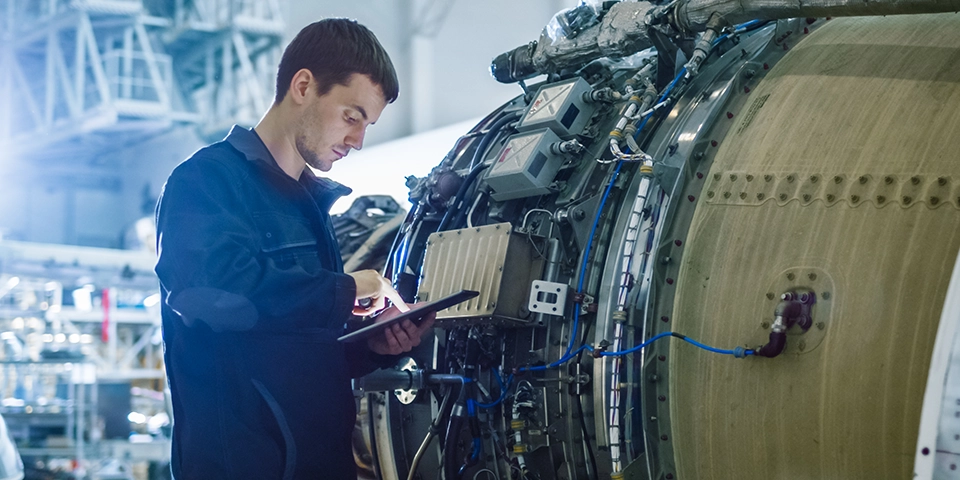
It often begins quietly – an engineering team preparing for what should be a routine software release. But what appears to be a minor update quickly becomes a complex validation exercise.
A software enhancement triggers hundreds of regression scenarios. An AI model refinement demands additional safety verification. A regulatory update introduces new compliance requirements.
What once took weeks must now be completed in days, making testing the final assurance gate – and often the biggest bottleneck. In aerospace, this challenge is amplified by the growing reliance on test systems that validate mission-critical hardware and software. As avionics, flight control systems, and embedded platforms evolve into software-defined and AI-enabled architectures, traditional validation environments need to become more flexible, scalable, and intelligent.
A New Phase in Aerospace Test Engineering
Historically, aerospace test systems were designed around deterministic test sequences, fixed test scripts and hardware configurations, and stable product baselines. While these approaches served conventional platforms well, today’s aerospace systems are fundamentally different. They are continuously updated, deeply integrated across embedded, avionics, and AI layers, increasingly dependent on complex hardware-software validation environments.
This shift requires test engineering to evolve from static execution platforms into intelligent, adaptive validation ecosystems. This is where AI in test engineering is becoming a strategic enabler.
The Growing Complexity of Aerospace Validation
Modern aerospace validation environments help verify critical system functionalities across Flight Control Computers (FCC), Line Replaceable Units (LRUs), power electronics and actuation systems, and communication and navigation subsystems. They also integrate embedded avionics, flight control systems, AI/ML-driven decision logic, sensor fusion, cybersecurity validation, and Hardware-in-loop (HIL) environments, and need to ensure:
- Reliable system interactions across integrated platforms
- Performance under dynamic operating conditions
- Compliance with stringent aerospace safety and certification compliance standards
Each system or firmware update introduces exponentially more validation scenarios across test benches, rigs, and automated test equipment (ATE). The challenge is no longer executing more tests – it is validating smarter.
AI as a Strategic Enabler for Intelligent Test Validation
Traditional test systems automate execution but remain largely script-driven, manually configured and reactive. AI in test engineering extends these capabilities by introducing intelligence throughout the validation lifecycle.
AI enables organizations to:
- Generate test programs automatically from engineering requirements,
- Prioritize test execution based on risk and coverage,
- Detect faults leveraging predictive analytics,
- Analyze high-volume test logs more efficiently, and
- Support self-healing test scripts and adaptive configurations.
Rather than serving only as execution engines, modern validation platforms become intelligent decision-support systems that continuously improve testing outcomes.
AI-Driven Test Engineering in Aerospace
AI is enhancing aerospace validation in several high-impact areas:
- Intelligent Test Coverage Optimization: AI identifies redundant test cases while uncovering coverage gaps, improving efficiency without compromising quality.
- Simulation-Integrated Validation: By combining AI with digital twins and Hardware-in-the-Loop environments, engineers can validate complex or high-risk scenarios that are difficult to recreate physically.
- Automated Root Cause Analysis: AI correlates signals, logs, and historical failure patterns to accelerate diagnosis and reduce engineering effort.
- Continuous Validation: As software-defined aircraft receive frequent updates, AI dynamically adapts regression testing without requiring extensive manual reconfiguration.
From Intelligent Testing to Engineering Intelligence
The next evolution is agentic test engineering, where AI-driven agents manage end-to-end validation workflows. These intelligent systems can interpret test requirements, configure validation environments, generate optimized test sequences, analyze failures and recommend corrective actions while continuously learning from previous test outcomes.
At LTTS, this capability is part of a broader vision of Engineering Intelligence, where test data becomes a strategic asset connecting requirements, validation, and field performance in a continuous feedback loop.
Engineering Trust Through Intelligent Validation
As aerospace platforms become increasingly autonomous, connected, and software-defined, validation must evolve beyond executing predefined test cases. AI in test engineering is transforming quality assurance into an intelligent engineering discipline that predicts risks, adapts to change, and continuously improves system performance.
Organizations that embrace AI-driven validation will accelerate certification, improve system reliability, and build greater confidence in every release. The future of aerospace testing will not be defined by the number of tests executed, but by how effectively engineering teams transform validation data into engineering intelligence – delivering trusted, resilient, and innovation-ready aerospace systems.