
NexGen Comms


Executive Summary
LTTS engineered the digital thread across the whole span of a network rollout: a web and mobile Activity Management System for construction and installation progress, a portfolio of site-supervision tools the client later migrated into its own deployment platform, and a customer portal for close-out package acceptance.
Read the Full Case Study. Anytime, Anywhere
Download Case StudyThe Challenge
The client needed real-time visibility of field operations, with site data joined to its own inventory and ERP systems. The alternative was what it already had: manual tracking on paper and spreadsheets, re-keyed later, verified by sending a manager to the site.
Downstream, the acceptance step was worse. Close-out packages are the evidence bundle that proves a site is complete; they were being exchanged with customers over an FTP server. That is the artifact the customer signs, and the signature is what releases revenue.
The requirement was one continuous chain from field capture to customer acceptance, flexible enough to match each customer's and each subcontractor's way of working.

Engineering Complexity
Four things made this harder than workflow software.
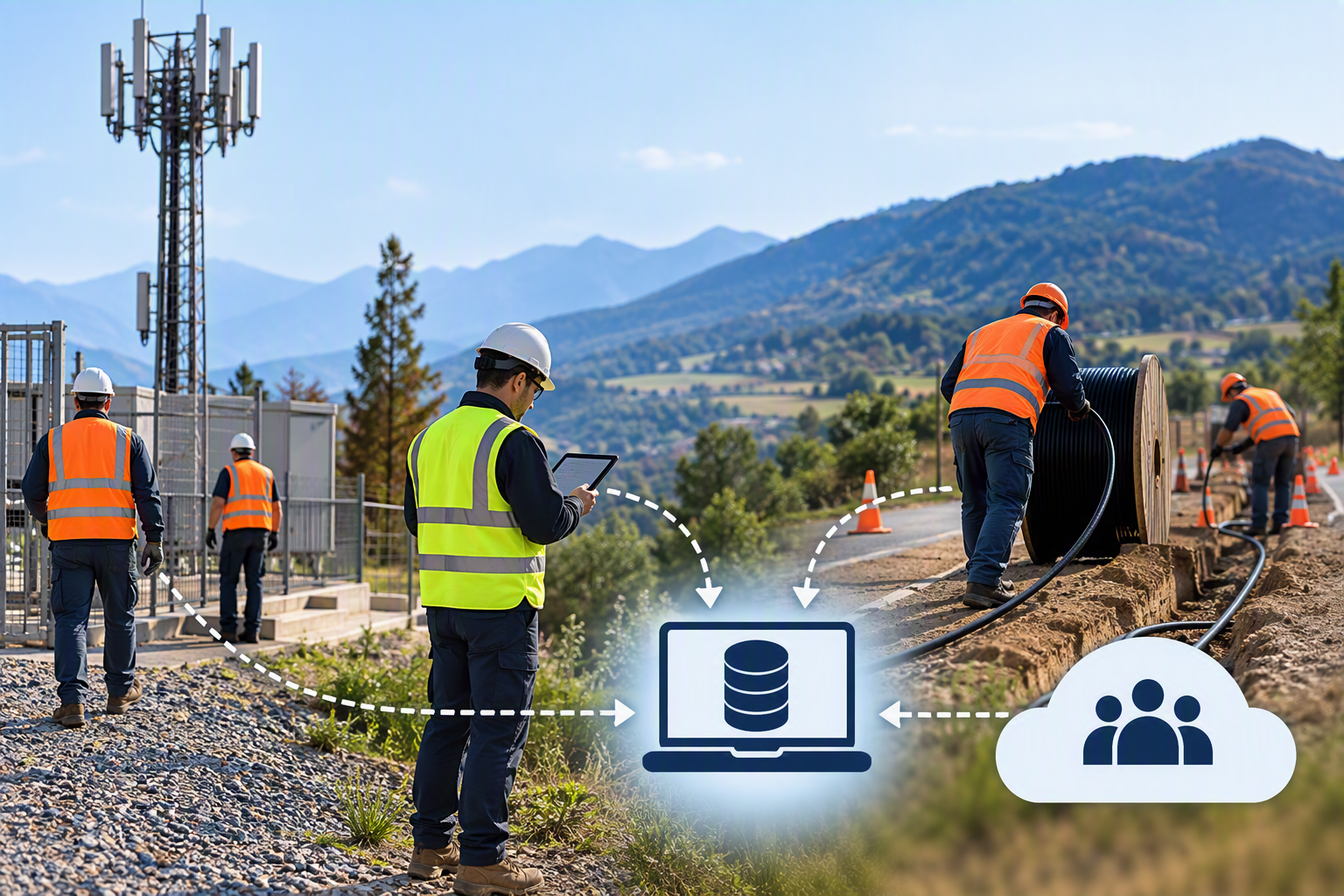
The work happens where the systems aren't
Network rollout is executed by third-party crews: typically one construction company for sites and a different
one for fiber. A site survey needs a physical visit. The system of record has to be fed by people who do not
work for you.

Acceptance is where the money is
The close-out package is not paperwork; it is the evidence that gates payment. Industry practice is explicit that validating acceptance reports triggers invoicing and payment to vendors. Carrier contracts enforce delivery of the package against a milestone invoice, with liquidated damages for lateness.
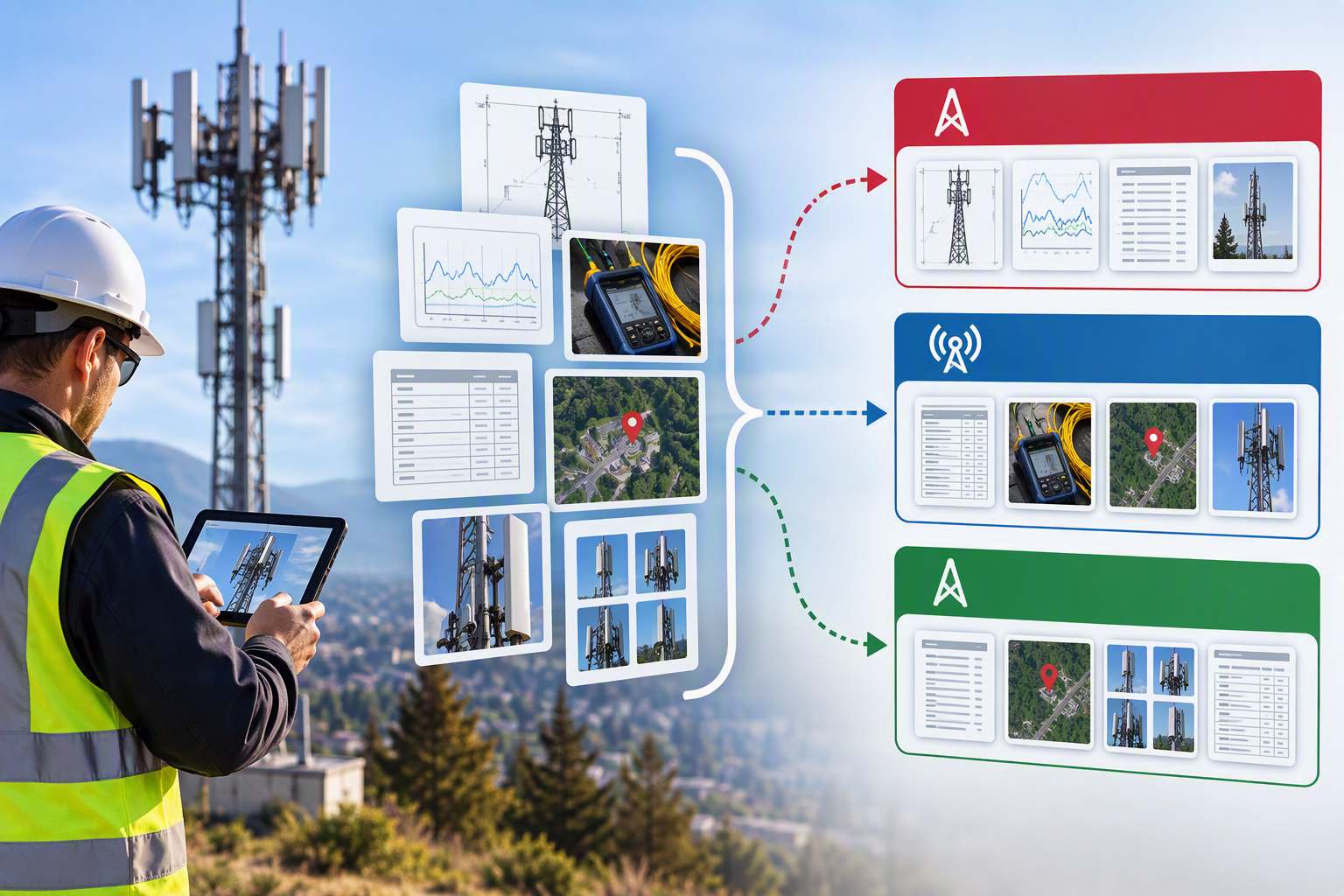
There is no standard for what a close-out package contains
Every carrier defines its own: as-built drawings, RF and fiber test results, commissioning data, GPS coordinates, antenna azimuth and downtilt, serial-numbered photographs. Practitioners state plainly that no cross-carrier standard exists. The portal had to accommodate per-customer definitions, not impose one format.

The volume is rising, not steady
5G raises deployment activity per unit area; the GSMA notes that 5G mmWave needs more transmitters to cover the same area as lower-frequency networks. The Small Cell Forum forecasts 61 million cumulative small-cell shipments by 2030. A tool built only for 4G volumes ages out.

Field capture
A web and mobile system for scheduling and tracking construction and installation work, with progress captured at the site on a phone rather than re-keyed from paper later. Workflows run to each customer's and each vendor's rules, and site data flows into the client's own inventory and ERP systems.

Tools rationalization
A portfolio of site supervision tools, built independently on the Salesforce Platform and on proper enterprise patterns rather than point configuration. A common adaptation layer means a new customer extends the framework instead of forking the tool. The client then migrated the whole portfolio into its own deployment platform, in three controlled stages.

Acceptance
The client's own customers log in, review the close-out deliverables and give acceptance. Approval reports straight back to the field tool, so site status and customer decision never diverge. File exchange over FTP goes away.
Business Outcomes


What changed
80% of the activity workflow

Why it is credible
Mobile field capture replaced paper and spreadsheet reporting. Progress data arrives from site in near real time rather than being transcribed after the fact.


What changed
30% improvement; less manager travel to site

Why it is credible
Integrated dashboards and event notifications put current status in front of managers, so corrective action happened during the activity. GPS-stamped progress made a physical trip unnecessary just to confirm status.


What changed
FTP file exchange to portal workflow

Outcome Why it is credible
The close-out package is the evidence that gates payment. Moving acceptance into a workflow, with approval routed back to the field tool, removes the slowest and least traceable step.


What changed
Faster resolution of customer-reported issues

Why it is credible
Portal, field tool and site tool are integrated, so an issue reaches its activity and its evidence without reconciliation across systems.


What changed
Tools migrated into the client's own platform, in 3 stages

Why it is credible
The strongest signal of engineering trust available: work built by LTTS became part of the client's standard toolset.


What changed
8 years on the field system; 3 years on the portal, multiple geographies and projects

Why it is credible
A small, stable team of four engineers on the field system, carrying deep domain knowledge rather than rotating through it. An extensible workflow and a common adaptation layer are what let one system serve different customers and subcontractors.
Engineering Intelligence In Action
We engineered the chain, not just the app
An app developer could have built the mobile form. A systems integrator could have connected the ERP. Neither, alone, produces an auditable chain from field capture to customer acceptance.

Built to each carrier's definition of complete
No cross-carrier standard exists for close-out packages, so the portal accommodates per-customer definitions instead of imposing one. That is why it serves more than one customer.

The client adopted it as its own
Tools built by LTTS were migrated into the client's standard platform in three stages, and the engagement is now in its eighth year on the field system.

Success Stories
High Speed Fiber Network Design, Implementation, and Managed Services
Read how LTTS enabled a large Indian telecommunications PSU to roll out the high-speed fiber network across 33 districts.
Know More